
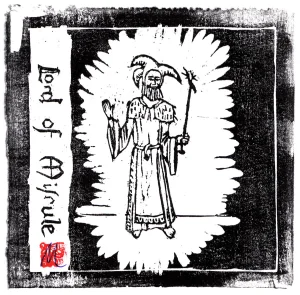
Christmas Lords of Misrule: How rebellious were they?
Lords of Misrule appear at various times in the traditional calendar but certainly in the twelve days of Christmas after 25th December.
Daisy Dunn has written in The Spectator about them. Her take is that were very largely a bit of ruling class fun and not at all subversive, although she does allow this might have been a possibility
https://www.spectator.co.uk/article/the-lord-of-misrule-and-the-lost-spirit-of-christmas-past/
An interesting discussion in correspondence between the US historian Natalie Zemon Davis and the late EP Thompson in 1971/2 can be found in Past and Present May 2017 which threw some further light on the historical origins and purposes of the Lords of Misrule
The piece refers back to an article Davis wrote in Past and Present 50 (1971) the Reasons for Misrule.
Here she argued that the Lords of Misrule elected on 26th December were categorised by age and gender, that is they were young men.
She wrote in a footnote about English examples:
The Lords of Misrule seem to be an example of youth officers..not the Lords of Misrule elected at the Christmas revels at Gray’s Inn or at Court but the ‘wildheads of the parish’ (described in 1585 by Philipp Stubbs in his Anatomie of Abuses) who elect a captain of mischief called ‘my Lord of Misrule’ and who go about with hobby horses and pipers and drummers..’
Was this subversive of the existing order, a real rebellion or a licensed way of ‘letting off steam’ at a time of year when little rural work could be done?
The opening paragraph of Prof Alexandra Walsham’s introduction to the 2017 Past and Present article is below. It makes clear that behaviours that started as attempts to enforce norms of personal behaviour became in some cases transformed into rather more rebellious and subversive activities. Prof Walsham also makes the interesting point elsewhere that we have the exchanges because they took place via the traditional mechanism of the letter. In the twenty-first century the corresponding e-mails of IMs might well not have been kept for posterity.
In 1971 Natalie Zemon Davis published a seminal article in the pages of Past & Present, entitled “The Reasons of Misrule: Youth Groups and Charivaris in Sixteenth-Century France”. A study of the carnivalesque rituals of mockery through which communities displayed disapproval of moral and social infractions, the essay opened a revealing window onto the festive customs through which unmarried young men publicly humiliated and regulated the sexual and marital behaviour of their neighbours. It also demonstrated the transmutation of these ludic rites into vehicles for social and political protest in urban environments. A year later, a piece on the English counterpart of charivari, commonly known as rough music or the skimmington ride, appeared in the pages of Annales. Written by Edward Thompson, the leading left-wing historian and founding member of this journal, this too examined the social function of the practice of parading offenders accompanied by cacophonous banging of pots and pans. It illuminated the role of this form of plebeian street theatre in publicizing scandal, compelling compliance with accepted norms, and criticizing unpopular authority figures and underlined its quasi-judicial character. Frequently reprinted and constantly cited, both of these essays have become classics of twentieth-century historical writing. They stand alongside two other equally famous Past & Present articles written by these scholars during the same interval of years: Thompson’s “The Moral Economy of the English Crowd in the Eighteenth Century” and Davis’s “The Rites of Violence: Religious Riot in Sixteenth-Century France”. Providing compelling new templates for the study of symbolic action and collective behaviour, they are among the most widely read and downloaded essays in the journal’s archive.


Leave a Reply