
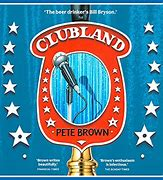
Pete Brown’s Clubland: Really Useful Knowledge about working class culture
Pete Brown kindly sent me a copy of Clubland to read while I was in hospital six months ago. I wasn’t too well at that point and I’ve only just got around to reading it. However since it’s the Book of the Week on Radio 4 this coming week hopefully the review below remains timely.
Despite their centrality to working class life from the later Victorian period there is very little published material on clubs from an historical and sociological point of view. Pete Brown’s book does a lot to rectify that.
I should say that I’m not unfamiliar with Clubland myself having long been a frequenter of what was Wood Green Labour Club, now Wood Green Social Club in North London. A venue for meetings of trade unions and social events while others played snooker or fruit machines. The value of it was from a labour movement perspective, meeting rooms, which were quite separate from the bar area and hence welcoming to those who did and did not drink.
Pete Brown’s book, well researched as are all his volumes, goes back to the origins of the Clubs with Henry Solly in 1862. Solly with upper class patronage had the idea that working class men- mainly those who followed skilled occupations- could ‘improve’ themselves at the clubs, with reading, classes and discussions.
It was not an entirely unsuccessful model but the Club and Institute Union (CIU) which still covers most clubs was developed on the basis of selling alcohol, games and entertainment as well as the improving aspects Solly had in mind. Alcohol sales funded much of the rest.
As Brown notes in the late nineteenth century some clubs were specifically political- see Stan Shipley’s History Workshop pamphlet Club Life and Socialism. That did not last however as political clubs, radical, Liberal, Labour, Tory etc developed as a separate strand as more working class men got the vote and supported political parties.
Brown divides clubs between North and South. While there may not be a fundamental difference my very limited experience of northern clubs does suggest a rather different milieu to mine in Wood Green.
Pete Brown comes from Barnsley and relates his memories of clubs he visited and worked in when he was a teenager combined with discussions with those involved with the clubs now.
Brown covers every aspect of club life and it is quite clear about strengths and weaknesses. The obvious one for many is the term Working Men’s Clubs. The CIU was resistant not so much to allowing women in but to giving them membership and a say in the running of things. There were campaigns but a change to allow women full participation came relatively recently.
The author is clear why clubs had historically been seen as male spaces. Before the days of affordable TV in a house (the 1960s) when a man returned from work there was little possibility or space for relaxation or leisure. Hence the community of the club was a central part of life for many. Of course that does beg the question of what the many women who also worked did in their leisure hours, such as they were.
What kind of working class community it was, or is, Brown also looks at. Some of the comic acts who worked the northern clubs- many featured on the TV programme the Comedians- were racists. That particularly applied to Bernard Manning and Brown is clear about that.
The clubs in the 1960s did in some cases become quite big business. The example of Batley is used which was able to attract international stars and large audiences.
But there was a much wider social and community aspect to the clubs. Bingo of course, but also darts, snooker and fishing trips. Perhaps a pub could do some of this but the club in many cases was better placed to do it better.
The club movement as Brown underlines is currently in decline. The existing CIU HQ is at Highbury Corner in North London but a casual visitor will find a good deal of the space occupied by the White Swan, a Wetherspoons pub.
The decline of clubs in the north can be attributed in part to the destruction of working class communities that Thatcher’s war on the miners in the 1980s represented. There is also the question of changing working class leisure patterns in the world of the internet and the smartphone. Entertainment can be accessed from anywhere. A visit to a club is less essential.
The working class has changed rather than declined and many core jobs remains central as anyone who has tried catching a train or waited for a letter recently will know. In my view a key issue is that many clubs have been too slow to relate to change. It is no easy matter.
Trade Unions have done a lot of work to organise changing workforces in recent times with a recognition that part of the working class is white and male but a lot is not. There has been some success but unions have a direct link to the workplace and the central experience of people’s lives that the clubs don’t have.
Organised leisure in some form will certainly continue. While you are pondering that or not, make sure to get a copy of Clubland. It’s a well written, well researched story about part of who we were and who we are now.


Leave a Reply