
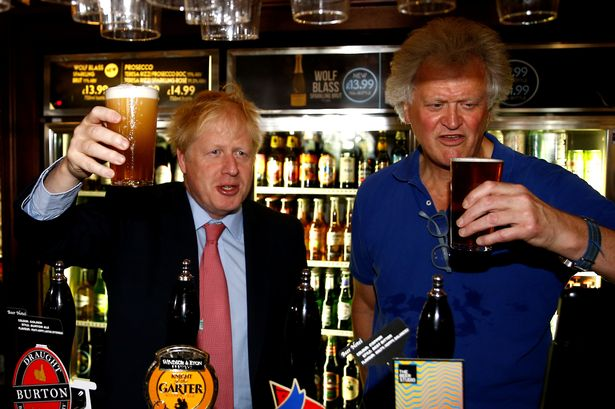
Once again on the price of beer. Wetherspoons raise prices 7.5%
The price of beer is in the news again.
The general points are around increases in the cost of raw materials, production (i.e canning) energy and the impact of Brexit. Of course businesses traditionally make such points as much as I as a trade union officer argue for wage increases.
If the price of beer goes up, does it matter however? After all no one has to drink it, and numbers don’t. The reality is that the price of beer forms part of the Retail Price Index so it is an important economic measure. I suspect though this is notoriously difficult to prove, that the price of beer has outstripped wage increases over a lengthy period.
That said the price of cask beer has increased significantly in recent times. I was in a beard friendly Bethnal Green pub recently where the well-kept good quality cask bitter was £5.50 a pint. You can still get cask for under a fiver in London but Spoons aside it’s not that common.
Wetherspoons however has announced a price hike of 7.5% (that’s for beer and food not Spoons workers wages). I checked the prices in two of the Spoons pubs I occasionally visit the Ernest Willows, City Rd, Cardiff and the Mossy Well in Muswell Hill. Ruddles Best cost £1.71 a pint in the former and Greene King IPA £1.71 in the latter. These are low (some would argue too low)prices but guest ask ales in central London Spoons have risen to £4.39 a pint. Meanwhile in Muswell both Oakham Green Devil and Thornbridge Jaipur are on keg for £4.60ish a pint. Economies of scale perhaps but if you’ve been offered a 2% rise it might seem attractive.
Historically beer was considered part of the normal diet for many workers involved in heavy industrial or agricultural labour and was one focus for the ‘standard of living’ debate about whether living standards fell or rose as industrialisation proceeded after 1800.
More specifically thanks to a Malt Tax first introduced to fund the country’s wars in the early eighteenth century, the price of brewer produced beer was considered to be high by the first decades of the nineteenth century. It also made the cost of home brewing a traditional practice, prohibitive.
E P Thompson in the Making of the English Working Class reports a letter from a magistrate in 1816 arguing that the Malt Tax would lead to revolution. In fact numbers of unregulated and unlicensed premises circumvented the law. Reality intervened with the 1830 Beershops Act that made the opening of premises specifically to sell beer much easier and much less costly.
Expect the controversy to continue, though Assizes of Ale, Government assistance to brewers and price regulation would all help. If the pub is the hub for many, keeping warm and being part of a community, then beer prices at levels that far exceed wage rises is a real issue and concern.
The answer should really be proper wages and benefits for all but until then it must be recognised that Wetherspoons has its places, at least for drinkers, if not staff or producers


Leave a Reply