
The modern Tory Party was founded in Lancashire. On Thursday Labour beat the Tories in a Lancashire seat by almost 40% of the vote
On Thursday the West Lancashire By-Election saw the Labour candidate Ashley Dalton get 62.3% of the vote. The Tory candidate came second with 25.4%. The existing constituency was formed in 1983 when it was won by the Tories. Despite being in the ‘Red Wall’ political zone it is now solid Labour.
The Tories nationally continue to poll in the mid to low twenty percent and the Telegraph has opined they may be the third party after the next Election with the SNP as the official opposition.
Those on the left may not feel enthused about Starmer’s Labour but the disintegration of the Tory Party is something to be happy about and there is Lancashire history here.
On Monday 16th August 1819 in central Manchester (very close to where the GMex conference hall now is) a peaceful protest for the vote left up to 18 dead and many hundreds injured as the local Yeomanry, military volunteers on horseback armed with sabres, were sent in to disperse the crowd after Magistrates determined that the meeting, as it was deemed a tumultuous gathering, was illegal. It was and is known as Peterloo.
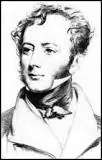
The Magistrate who gave the order to send the Yeomanry in was William Hulton (1787-1864).
In a review of books published to mark the 150th anniversary of Peterloo in 1969 EP Thompson noted that Hulton’s mother had a prize horse called ‘Church and King’ providing a flavour of what the family was like. He noted too that when it came to events like Peterloo it was not so much that Hulton would lie about what took place (he did) but that he was simply not interested in what the ‘plebs’, those fighting for the vote, said or did.
Hulton nevertheless had an interesting and lengthy life.
Educated at Brasenose College Oxford, in 1811 he became High Sheriff of Lancashire. In this capacity he sentenced four Luddites to hang at Lancaster Castle for arson at Westhoughton mill.
Hulton was then 24 but such was his reputation as a class warrior that by 1819 he was chair of Lancashire and Cheshire magistrates.
He was in charge of the magistrates that sat in a house overlooking St Peters Field in central Manchester on that late August Monday over 200 years ago now as protesters gathered. EP Thompson suggests that it is likely that he had already had the backing of Home Secretary Sidmouth to disperse the crowd using force come what may.
Between 1.15 and 1.45 on the day, that is exactly what the Yeomanry on his order did.
The Peterloo Massacre as those events are known meant that Hulton became notorious and it meant that standing for public office was not an easy option for him.
Given his family background however this was not a problem.
The family estate Hulton Park was the site of no less than seven coal mines. In fact such was the extent of the workings that even before the Stockton to Darlington railway had been built George Stephenson had been engaged to build a rail line to take the coal to market.
In 1824 Hulton became Chair of the Leigh and Bolton railway company.
Hulton’s relations with his mining workforce were predictably dreadful. He paid them not in money but in kind until forced to change by the 1831 Truck Act. He refused entirely to countenance mining trade unionism.
In the twentieth century in 1910 there was a mining disaster leaving 344 dead at one of Hulton’s mines.
Matters did not however go well for the Hulton family. The mines were nationalised in 1947 and while compensation was paid the family source of continuing income was removed. By 2000 the Hulton family estate was up for sale.
Hulton left another legacy. As EP Thompson notes, in 1832 the Reform Act, a result of Peterloo in 1819, saw the Tories lose South Lancashire. Hulton was one of those who met in a beer house to form the South Lancashire Conservative Association dedicated to defending, like the family horse, Church and King.
That organisation was one of the forerunners of the modern Tory Party.


Leave a Reply