
Heart Union Week 2024: learning to love the tradition of collective action
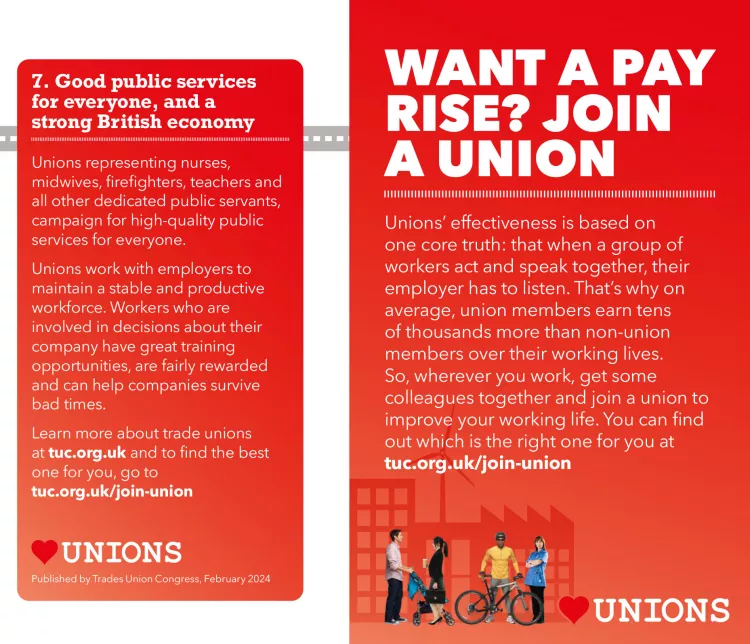
12-18th February 2024 is ‘heart’ unions week. Of course 14th February is Valentine’s Day but the week underlines that ‘love’, or perhaps fellowship, is collective as well as individual.
https://www.tuc.org.uk/heartunions
As they usually do, unions and workplace organising face some challenges
In terms of strikes the figures which until recently were amongst the lowest since the early 1890s when records began have risen sharply since mid-2022. The density of union membership still leaves a lot to be desired but overall trade union membership is steady and rising in some sectors of the workforce. Trade unions and collective action, partly thanks to Government intransigence, have become popular again
Union membership still needs to be higher and industrial action in hospitality and by security guards shows that unions are quite capable of organising in less traditional areas of workplace strength.
This can and are changing very quickly. You need only look at the 1889 London dock strike- previously unorganised workers with a strike wave across the London and other areas of the UK to underwrite matters- to understand that periods of apparent quiet can suddenly explode.
It’s important also to grasp a wider context.
The reality is that if you are not a trade union member your ability to do much about any issue at work is very limited indeed. And if you are then there is the perpetual work of making sure the union effectively represents people- that only comes from an active membership not a benign General Secretary! It will also help if you are actively politically. A change of Government that is actually on the side of working people remains long overdue.
However self-activity is the start. As the late Marxist historian Eric Hobsbawm noted the world won’t change itself for the better on its own. People are required for that, and people organised in some form of collective activity, which is why being in a union is as important now as it was in the 1890s.


Leave a Reply