
The real Shrove Tuesday tradition not just Pancakes but riots & subversion
In 2026 the moveable feast of Shrove Tuesday, the day before Lent, is known almost entirely for the consumption of pancakes.
Historically matters, in certain periods, particularly the early C17th, were a bit more exciting.
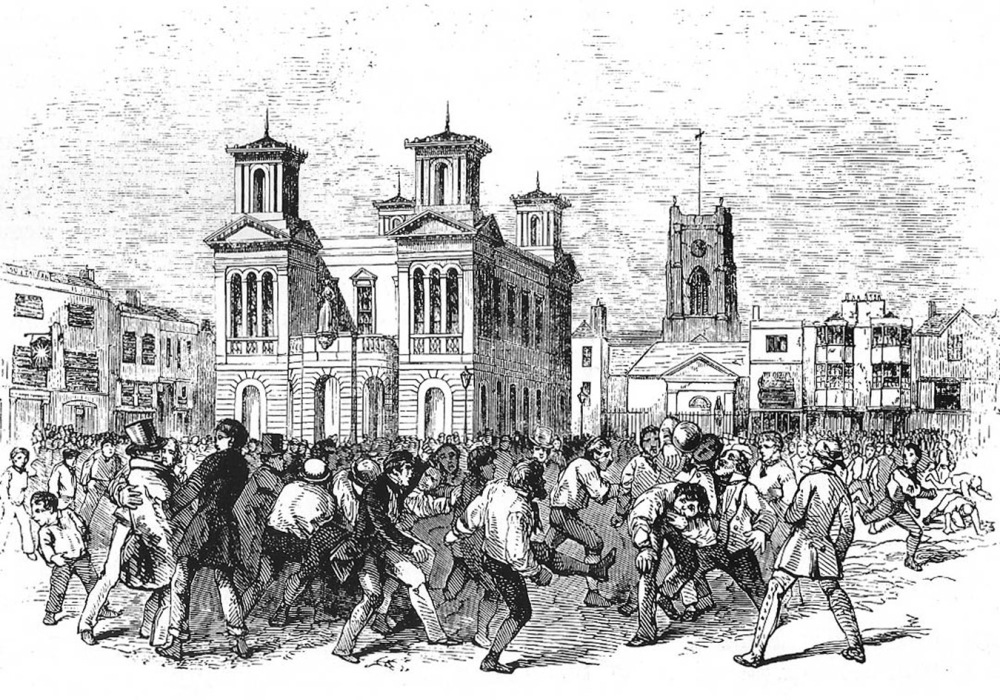
Shrovetide was the occasion for ball games, what Ronald Hutton in the definitive volume on British folk customs, Stations of the Sun, notes as ‘licensed misrule’.
By 1598 the ball games had started to develop into something wider. There were, Hutton records, riots on 24 out of the 29 Shrove Tuesdays in the early Stuart period (1600s). The riots took place mainly it seems in areas to the north of the City of London and involved centrally apprentices but also craftsmen.
E P Thompson noted in his essay Patrician Society, Plebeian Culture about eighteenth-century England a Shrove Tuesday game of football which took place at Kingston in 1799, The magistrates banned it but the ‘populace’ and the ‘mob’ ‘triumphantly’ defied the ban.
Riots were not random but aimed at particular targets, in particular brothels and playhouses. Hutton records that between 1612-14 on Shrove Tuesday a Shoreditch brothel was attacked each year until it shut. On Shrove Tuesday 1617 a new Drury Lane playhouse was destroyed and prisoners freed from Finsbury prison by rioters.
Hutton notes that, while the targets may at least seem odd to modern eyes, they ‘fitted into a much older tradition of cleansing a community before Lent’. In other words the Shrove Tuesday crowd, in rioting, was seeking to destroy what it saw as the less moral parts of the early C17th economy.
The tradition of rioting died out only slowly and the mass playing of football on Shrove Tuesday still goes on in some places- Ashbourne in Derbyshire for instance- as a distant echo of earlier times. Shrove Tuesday football had no rules and no limit on the number of participants. The struggle (or fight) to get possession of the ball was at least as important as what was done with it afterwards.
That is also a reminder that Shrove Tuesday in the traditional calendar was the end of the reign of the world turned upside down figure of the Lord of Misrule, often appointed on the previous All Hallow’s Eve 31st October.
In short in the 1600s Shrove Tuesday was not about pancakes but about disorder, riot and subversion

 Kmflett's Blog
Leave a comment