
March strikes: Histories of the Present
When the Radio 4 News at 7pm on 15th March could report first on Hunt’s Spring Statement, and then secondly note that it had almost been overshadowed by strikes on the day, its clear something significant is moving, at least potentially.
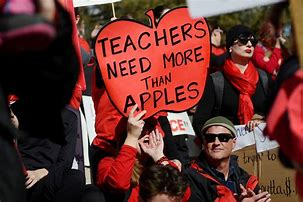
The strikes involved a range of unions- Prospect and the PCS in Government employers across the UK, NEU teachers in England, ASLEF and RMT, London Underground, BMA Junior Doctors in England, UCU University workers across the UK.
There was an impressive central London march and rally. I attended one called by the Wales TUC in central Cardiff. At the Cardiff rally there were of course veterans of many previous fights but there were also numbers of younger trade unionists. Indeed such was the scale of the action that many on strike would have been doing so for the first time.
The strikes had the focus of pay, jobs and conditions and the statistics tell the story. TUC research officer Alex Collinson tweeted that if wages had gone up at the same rate as before 2008 they’d be £233 a week higher. Hunt’s Budget ushers a period of sustained drops in living standards larger than anything seen since the 1950s.
These were mostly one day or limited duration strikes part of a pattern of a significant rise in action since last summer. It’s the biggest strike wave for perhaps 30 years. Historical comparisons of what official figures term ‘days lost’ through strikes are a basic way of grasping the class struggle but reveal little about its dynamics.
A memory of the battles, victories and defeats of past decades, going back to the 1970s, is often sadly lacking. Industrial relations academics who chronicled and analysed this have long since been subsumed into University Business Studies departments which gives a very different perspective on things. Outside of papers like the Morning Star, media labour correspondents, who could report on strikes with an accurate knowledge of the forces involved and the likely outcomes, based in part on historical precedent, have gone. Instead we find reporters who have only the faintest idea what a trade union is, let alone why and how trade unionists take strike action.
There remain issues about how far victories can be achieved by our side. Here trade union activists and leaders are important.
In the strikes and victories of the 1970s a body of theory was generated, for example by James Hinton and Richard Hyman, about the nature and role of trade union structures. That work I suspect is very largely unknown to activists in the current day. Its history of the present that could usefully be recalled and reviewed.
Union leaders have an interest in successful strikes. They attract more members and income and build the union’s strength- important matters. The interest in widening and generalising action at the political level is at best uneven though. Are we talking to the Tories or trying to get the Tories out? It’s not an issue confined to the UK. Similar questions arise in France with action on pensions. Is the aim of recent militant demonstrations to get Macron to withdraw the plan to increase the pension age or is it to get rid of the Government altogether, or perhaps both?
The point is historically that these are not new questions, and previous struggles can provide important lessons for the present. At the same time each new battle is differently configured and needs to be understood and pursued according to the balance of class forces at work.
Work and history in progress…


Leave a Reply