
The Treason Felony Act (1848) aimed at critics of the Monarch remains law in 2023
Reports suggest that the Met Police will have a ‘low tolerance’ of people making modest protests at the Coronation of King Charles III. The police and knowledge of the law are not two subjects that usually find a close relation but the current Suella Braverman has been passing laws that make even thinking about a protest potentially illegal.
However a rather more draconian law than Braverman has yet dreamed up was passed in 1848 which dealt with criticising the monarch remains in part on the statute book however
2023 is the 175th anniversary of the effective beginning of the British 1848, the Chartist protest on Kennington Common on Monday 10th April 1848, and it’s worth paying attention to the efforts that the Government made to frustrate protest.
John Saville in his authoritative book on 1848 (CUP) believes these were decisive.
The actual machinery of Government in 1848 was very small indeed but the forces it could command were considerable as were the laws it had to deal with threats to order.
The Treason Felony Act dates from 1848 when it brought together several earlier Acts and replaced the death sentence for treason with a felony- in practice at the time transportation to Australia.
The Act was discussed in the House of Commons on the evening of 10th April 1848 and passed within 24 hours despite concerns that a clause on ‘open and advised’ speaking could lead to a treason sentence for political dissent.
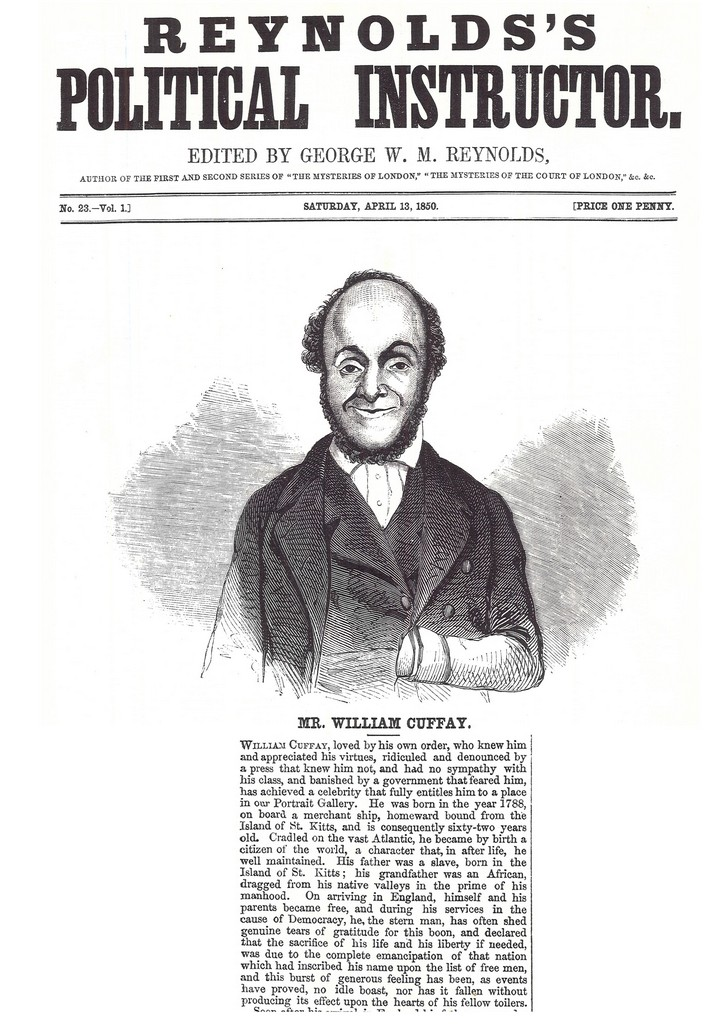
The State had reason to do this. Juries were reluctant to convict where the death sentence was involved and in the revolutionary year of 1848 the State wanted convictions to frustrate any attempts at revolution. Hence the first two people to be convicted under the newly amended Act were the Irish Republican Chartist John Mitchel and the black leader of London Chartism William Cuffay.
An account of Cuffay’s Trial is here:
http://cuffay.blogspot.co.uk/2011/01/reply-at-trial.html
The British State, the oldest in the world, was concerned to crack down on political opponents and to avoid creating martyrs. Beyond the boundaries of the UK, British imperial policy was not so nuanced.
The Treason Felony Act originally allowed for transportation to Australia (Cuffay was despatched to Tasmania) but this was changed in 1868 to imprisonment
https://en.wikipedia.org/wiki/Treason_Felony_Act_1848
Section 3 of the Act remains in force and was challenged by the Guardian in 2001 on the grounds that it made even arguing in writing that the monarchy should be abolished an offence. A judge agreed and noted that the wording would not sustain a challenge under the Human Rights Act. The Government claimed to have abolished Section 3 in 2013 but in fact it remains law
3. Offences herein mentioned declared to be felonies
If any person whatsoever shall, within the United Kingdom or without, compass, imagine, invent, devise, or intend to deprive or depose our Most Gracious Lady the Queen, from the style, honour, or royal name of the imperial crown of the United Kingdom, or of any other of her Majesty’s dominions and countries, or to levy war against her Majesty, within any part of the United Kingdom, in order by force or constraint to compel her to change her measures or counsels, or in order to put any force or constraint upon or in order to intimidate or overawe both Houses or either House of Parliament, or to move or stir any foreigner or stranger with force to invade the United Kingdom or any other of her Majesty’s dominions or countries under the obeisance of her Majesty, and such compassings, imaginations, inventions, devices, or intentions, or any of them, shall express, utter, or declare, by publishing any printing or writing … or by any overt act or deed, every person so offending shall be guilty of felony, and being convicted thereof shall be liable … to be transported beyond the seas for the term of his or her natural life.


Leave a Reply