
Orange paint powder & the traditions of protest
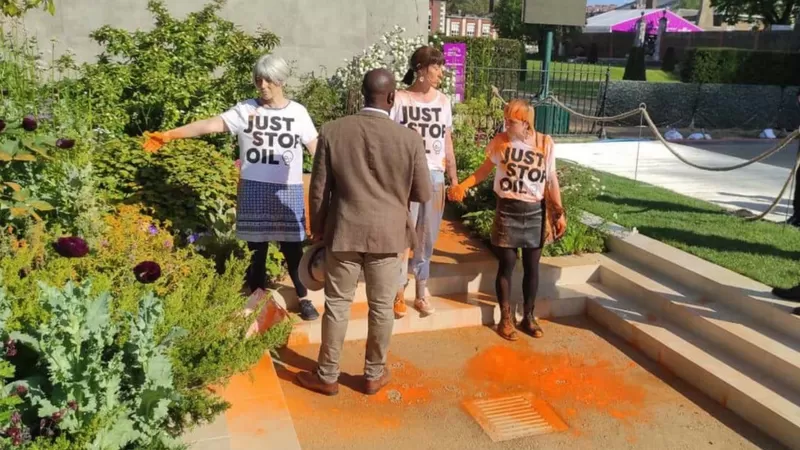
Just Stop Oil protesters have developed an affinity with orange paint powder as a means of making a protest. It was thrown over one of the tables at the Championship snooker in Sheffield in April, at a garden at the Chelsea Flower Show this week and today at a rugby match No great harm was done in any of these instances. Whether it amounts to criminal damage is a matter for the Courts not the police whose knowledge of the law might be described as at best patchy.
Publicity followed and whether people applauded or booed there was an impact. How effective such protest is compared to other forms of protest can be debated but the right of people to protest in a way they feel appropriate (certainly where it is peaceful) should be defended in a democratic society.
Moreover there is a long tradition of such protests
The Stop the Seventies cricket tour comes to mind, which successfully stopped an England tour by the apartheid South African cricket team.
Some have criticised the protests on the basis that snooker or rugby has no connection to fossil fuels. Protest doesn’t always work like that as the George Davis is Innocent Ok protest that stopped the 1975 Headingly Test Match underlined (he was innocent btw)
https://www.bbc.co.uk/news/uk-england-leeds-13519771
In Victorian times objects in protests were a good deal more robust than paint powder though
Recent assaults with milk shakes, eggs and vegetables are (at least from a candidate’s point of view) presumably preferable to the early custom of using dead animals as election projectiles. Dead cats seem to have symbolised hatred towards an individual. When the unpopular John Fitzgibbon, Earl of Clare, died in Dublin in 1802, dead cats were flung on his coffin. Even earlier, public executions at Tyburn were characterised by the crowd flinging “the dead carcasses of dogs or cats.” Young boys were reported as throwing dead cats during the Gordon Riots in 1780. When such carcasses became an election weapon is unclear, though jokes about “poll-cats” were apparently abroad by 1812. In 1818 in Bristol candidates were reported as being pelted with “stinking fish, dead dogs, cats [and] rats.” Two years later Edward Jeremiah Curteis was commended for not faltering “at the thought of the rotten eggs and dead cats of Chichester” which he would have to face on the Sussex hustings. Thirty years further on, in 1852, the Ulster newspaper, the Northern Whig, reported that “there is seldom a contested election without broken heads… Honourable Members seldom escape the salutes of rotten eggs and dead cats.” There may have been a connection with his vote in favour of the Night Poaching Bill when M.T.Bass was pelted with dead dogs, cats and rabbits, at Derby in 1865. As this was an indoor meeting, the dead animals had clearly been brought in by the audience with deliberate intent.


Leave a Reply