
Wage Stagnation, the Cost of Living, Interest Rates & Recession. Are we hearing the full conversation?
The Bank of England raised interest rates for a thirteenth time on the 22nd June to 5% meaning those with mortgages will sooner or later have to pay more and have less disposable income. There is a knock impact on those that rent too.
The Bank follows an orthodoxy that believes that higher interest rates will control inflation even if it means a recession.
The unspoken point here is that what is really be defended is profit and that is reflected by continued resistance from employers to pay rises that meet the cost of inflation, which is at 8.3% in May 2023
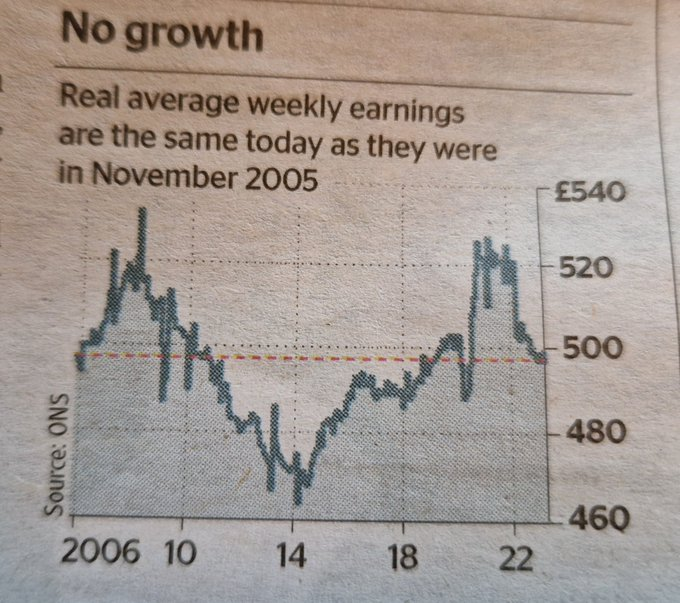
Figures from the ONS suggest that over the last twenty years wages have stagnated for the longest period since the Napoleonic Wars.
The Wars ran from 1803-1815 and the period after up to the Great Exhibition in 1851 have been the subject of considerable historical debate. Right wing economic historians argued that wages and the standard of living improved during this period. E P Thompson, in one of the less satisfactory parts of the Making of the English Working Class argued that far from all wages increased and that their wider issues, for example the intensity of the exploitation of labour, which simple statistics can’t effectively measure.
Average weekly pay is now no higher than it was in 2005. The ONS figures suggest that with inflation at 8.3% (food inflation is 18.3%) it won’t be until the start of 2025 that real wages start to rise.
As with E P Thompson there is a wider conversation that needs to be had. Even where workers are winning wage rises through union action few exceed 10%. Meanwhile profit levels and the pay of bosses are not, in general, declining but increasing.
So far nothing has been done to direct the profits of banks to ease the mortgage crisis. Energy prices are declining slightly but nowhere as fast as forecast and certainly not because the energy companies are reducing their profits
It’s not just real term wage cuts that provoke anger but the knowledge that we are definitely not all in it together.


Leave a Reply