
Does the left benefit from ruling class crisis
The British ruling class is in a period of crisis which dates back at least to the June 2016 Brexit vote. Some sections of Capital want Britain to lead a race to the bottom in terms of the exploitation of workers, outside of the EU. Other sections would prefer to be part of an EU if not a global market where the framework of profit and exploitation is regulated to prevent advantage to any specific area of business.
Most recently the crisis has seen the Tory Party deeply divided politically. Former Tory leader and Prime Minister Johnson has resigned as an MP and been excluded from Parliament on the basis of Committee report where the majority were Tory MPs. Yet when it came to a vote in the Commons a majority of Tory MPs and Sunak the PM were nowhere to be seen.
As Truss’s brief tenure at No.10 in the autumn of 2022 underlined the Tories are not sure if they want to promote economic growth- that is profit at the expense of workers- or whether State intervention to make sure such a process does not lead to a revolt from below is needed. The latter faction around Sunak and Hunt are currently in charge and trying to engineer a recession.
Such splits should provide the labour movement and the left with an opportunity to promote positive change. Historically they certainly have done so but not unproblematically so.
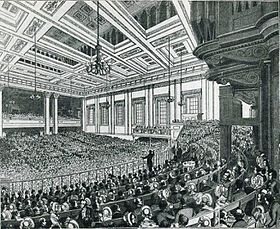
The Tory split over the Corn Laws in 1846/7 is the most well-known. Peel, had been elected as Tory Prime Minister in 1841 with the support of many rural landowners, came to the conclusion that the wider interests of capital demanded not protectionism but free trade. The Corn Laws were abolished and the Tories split. By 1859 Peelite Tories had linked up with the Whigs to form the Liberal Party.
The political crisis of the later 1840s saw the success of a Ten Hours Bill designed to limit the hours of work.
The next crisis of ruling class politics came in 1866. The Liberal Government was under pressure to extend the suffrage and give more working men the vote. How it was to be done proved controversial. The Government fell and the 1867 Reform Act was the work of a Tory Government. However the impetus for change had come from outside Parliament, with the Reform League. The extension of the vote came after a mass demonstration in Hyde Park in May 1867. It had been banned and the military were on stand by but the numbers were simply too great and too well organised to stop.
The realignment of ruling class politics was a feature of the last quarter of the nineteenth century with the main issue being Home Rule for Ireland, promoted by Gladstone’s Liberal Government. This led to a move in the reverse direction as Liberal Unionists moved to the Tory Party.
In 1912 Asquith’s Liberal Government introduced the Third Home Rule Bill since 1886. The practical consequence of this was the consolidation of Liberal opponents of the Bill into the Tory Party. The background was the Great Unrest of 1910-14. As ruling class politics at Westminster was divided, the labour movement and the left advanced, with significant increases in union membership and many victories against employers.
None of these historical crisis led on to wider political change on the left however. That remains a conundrum. How to take advantage of splits in the ruling class and in doing so use this to build an organisation that can change the world
This post appeared originally in the Morning Star


Leave a Reply