
Cholera to Covid,from Engels to Sunak: the return of ‘social murder’?
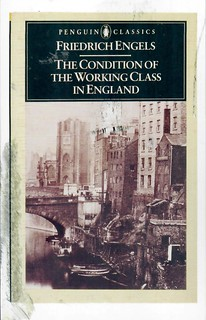
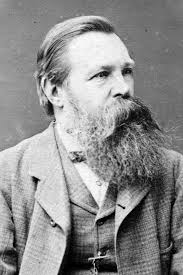
Friedrich Engels book on the Condition of the Working Classes in England in 1844 is a well- known classic of social history. His investigations helped to inform the important understandings of Marx and himself about how capitalism does and does not work.
One concept that he mentions in the book has recently begun to receive attention again. People that he spoke to and the Chartist press argued that working and housing conditions of the proletariat in mid-nineteenth century England had such a significant impact on the health and life expectancy of many that the Government was guilty of ‘social murder’. It was aware of the conditions and the short lifespans of many but did little about it.
Engels wrote:
Society in England hourly and daily commits what the working men’s organs call social murder, that it has placed the workers under conditions under which they can neither retain health nor live that long that it undermines the vital force of these workers, little by little, and so hurries them to the grave before their time…society knows how injurious such conditions are to the health and life of the workers, and yet does nothing to improve these conditions.
One of Engels aims in writing the book was to demonstrate that this was indeed the case. He wrote that he broadly accused the ruling class of social murder and that it should either address the issue or hand over the running of society to the ‘labouring classes’
The Office of National Statistics has reported that a newly born boy in 1841 was expected to live to 40.2 years while in 2011 this was 79. The figures for a girl were slightly higher. Of course these figures looked across all classes. The average lifespan of a male worker in Manchester in 1850 was 38.3 years.
However life expectancy has been dropping slightly. The pandemic has had an important impact but in fact, while the expectation has been that how long people would live would continue to gradually increase, it hasn’t.
The change can be traced back to the period after the 2008 financial crash and in Britain in particular to the election of a Government committed to a policy of austerity. Despite the ‘levelling up’ agenda of Johnson and Sunak we remain in that framework.
The impact of consistent cuts to NHS spending, and public services, together with a push towards privatised jobs with poor conditions, led to precisely the kind of consequences that Engels saw in the 1840s, although obviously on a smaller scale.
The pandemic magnified all this and also provided a sharper focus on politicians who could do something about this but choose not to.
The Covid Inquiry over the last few weeks has heard about particular politicians who chose not to do things in 2020. Boris Johnson really did say, it was reported, in the Autumn of 2020, ‘let the bodies pile high’. Rishi Sunak meanwhile, determined to keep the economy open, is reported as being sanguine about people dying as a result.
Engels 1844 accusation of a Government committing social murder still seems relevant.


Leave a Reply