
Does marching make a difference: an historical perspective
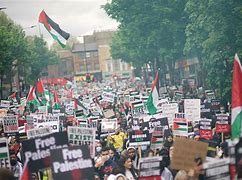
On Saturday 25th November a further march for Palestine, calling for ceasefire will take place. There will also be other marches-in Cardiff for example.
There is at best what might be described as a temporary ceasefire in Gaza after which the usual far right to fascist Israel Government spokespersons have promised more months of death destruction.
Some media commentary refers to a two clock strategy here. One clock is the Israeli Government’s one determining how long they can pursue a military campaign. Such a campaign costs money which they increasingly don’t have. The other clock is how far their allies in the US, EU and UK are prepared to put up with daily atrocities in Gaza.
Here marching makes a difference. Of course the White House and Downing St don’t care as such how many march. It’s the political impact and potential instability that grows from protest that is the concern, as well obviously, the global economic impact.
In short protest is a key part of getting Israel’s war to stop.
It’s appropriate to relate back to the 60,000 or so who gathered in central Manchester for the vote on 16th August 1819 because, while the immediate impact was negative- there was a massacre of protesters- over the following decades change did occur and the Government did not attempt another Peterloo.
I’ve been on many marches down the years from those opposing racism and cuts, to the Iraq War, the poll tax, abortion rights etc.
Some achieved little, others made quite an impact. Each one needs to be looked at individually to draw any general lessons. Certainly the composition of a march, the timing, and the strategy pursued to get change are key elements.
There are two wider points. Firstly marching is not the only way to get change. There is indeed what the US sociologist Charles Tilly called a repertoire of contention, of possible strategies, from riots to meetings, petitions and lobbies. All have their place depending on context.
Finally however on the 55th anniversary of the 27th October 1968 anti-Vietnam war demonstration its worth reflecting that most of the largest marches in UK history have taken place in the last 50 years.
It represents a change from people relying on others to make the point for them to wanting to make it themselves. Of course it’s not always effective but it reflects a society where people want to make their voice heard and expect it to count. The age of political deference has gone.


Leave a Reply