
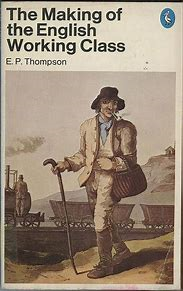
To mark the 60th anniversary of the publication of E P Thompson’s Making of the English Working Class, Radio 3 is running a nightly series of talks on the book (22.45). On Wednesday 6th December the historian of the Caribbean and Britian Christienna Fryar highlighted a significant gap in the book- its failure to deal with slavery,the slave trade and significant black figures.
In 2013 the London Socialist Historians Group ran a roundtable at the Institute of Historical Research on the Making. Marika Sherwood spoke on the absence of black history in the book. Significant figures such as Robert Wedderburn and William Davidson a black man and one of the Cato St Conspirators (1820) are either ignored or mentioned only in passing. The reality is that the making of the English working class was inextricably linked with slavery and the slave trade is absent.
Fryar brings a very sharp focus to this in pointing out that the 1832 Reform Act provided only a limited suffrage. The Emancipation Act 1834 did not free slaves in the British West Indies as such but declared them apprentices. In the same year the Poor Law Amendment Act set up Workhouses for those who couldnt provide for themselves.
Its message with a contemporary relevance. In a speech in the Commons on 6th December Suella Braverman called for Britain to leave the European Convention on Human Rights so that asylum seekers, environment protesters and those who want statues of racists taken down can get summary justice.
Why did Thompson’s book have such a gap on matters relating to race and imperialism? The book relies on thick description, detailed archival research which Thompson undertook while an adult education tutor. Perhaps the evidence was not in the sources, perhaps he was not looking.
Thompson and his family had a long connection with India and anti-imperial struggles and as a socialist activist he certainly campaigned against the various tyrannies of British colonialism. He did he argued that the reason why the British left had not developed more Marxist theory was because it had ‘so bloody much to oppose’ when it came to the activities of its own ruling class.
A conundrum but one on the book’s 60th anniversary that deserves serious discussion and yet more research


Leave a Reply