
Robert Saunders
After Peter Bone’s recall is it time for Annual Parliaments
The successful petition to recall Tory MP for Wellinborough Peter Bone after he was suspended from Parliament for more than days has forced a Parliamentary By-Election. It raises the question again of how it is that elected representatives can be held accountable for what they get up to.
The original template can be in the 1838 People’s Charter, in many ways one of the foundation stones of British democratic practice.
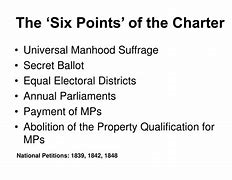
The Six Points were:
1. A vote for every man twenty one years of age, of sound mind, and not undergoing punishment for crime.
2. The ballot —To protect the elector in the exercise of his vote.
3. No property qualification for members of Parliament—thus enabling the constituencies to return the man of their choice, be he rich or poor.
4. Payment of members, thus enabling an honest tradesman, working man, or other person, to serve a constituency, when taken from his business to attend to the interests of the country.
5. Equal constituencies securing the same amount of representation for the same number of electors,–instead of allowing small constituencies to swamp the votes of larger ones.
6. Annual Parliaments, thus presenting the most effectual check to bribery and intimidation, since though a constituency might be bought once in seven years (even with the ballot), no purse could buy a constituency (under a system of universal suffrage) in each ensuing twelve month; and since members, when elected for a year only, would not be able to defy and betray their constituents as now.
From: http://www.chartists.net/The-six-points.htm
The Six Points are of course hardly perfect and that is not just with the benefit of historical hindsight.
Hindsight suggests that the exclusion of votes for women was inexcusable but in the context of 1838 it was a strategic not an in principle matter. The Chartists felt that getting adult male suffrage would be tough enough and an important first step to further extensions of the vote. It depends how you want to read British history but there is a good argument that they had a point.
However the criticism at the time was that the demands of the Six Points were too moderate, and indeed came largely from the more militant sections of the movement, which in the late 1830s [though not later] were to be found in London.
The Grand National Holiday [general strike] of August 1839 and the Newport Rising, a narrowly failed attempt at armed revolution in November 1839, suggest strongly that other strategies were available for winning the vote than the People’s Charter.
However the basic democratic demands of the Charter, around the franchise and secret ballot did find a strong political echo.
So strong in fact that all the Six Points became law during the Victorian period with the exception of the demand for Annual Parliaments.
The call for more regularly elected MPs long survived the demise of Chartism around 1860. The Social Democratic Federation was pursuing demands for Parliaments to be elected every two or three years in the 1880s and they continued to be part of the political landscape of radicalism and labour until around World War One.
What caused the demand to disappear is less certain. One might speculate that the proclamation of the Labour Party constitution in 1918 represented some kind of settlement in terms of what ideas were now ‘in’ and which were not, but the point suggests further research.
Even so I still think annually elected Parliaments are well worth considering.
Most other institutions from large Companies to trade unions held elections on an annual basis for most positions. It is recognised as an important part of democratic accountability
The argument against of course is based around the cost of holding annual elections and the upheaval of doing so meaning that politics would focus very much on the short term.
However costs can be controlled, if need by law, and it is not particularly clear that annual elections for Parliament would really make it any more short term in its perspectives and policy making than it already is in most cases.
Given the debates of the later Victorian period perhaps a Parliament elected once every two or three years would be something to look at initially. An alternative would be to have multi-member Parliamentary seats and elect a proportion of MPs every year.
Perhaps it might not work well, but are there many claiming that the existing system of Parliamentary democracy is doing the most effective job possible?


Leave a Reply