
From E P Thompson to Jacques Delors: what kind of Europe?
https://en.wikipedia.org/wiki/Jacques_Delors
Jacques Delors who has died at 98 was a member of the French Socialist Party and a Minister from 1974. He’s better known as the BBC have reported as the architect of the EU.
Delors promoted the idea of a single European market, the Euro, a central bank and with all that free movement of labour and people within (but not into and out of) Europe. Delors idea was a managed market where the conditions of exploitation of labour were standardised. That meant of course protections for workers too.
Delors promoted a European identity over individual nation states. The current state of the EU suggests this was not the route to a social democratic Europe Delors perhaps thought it could be.
There were other models of how a genuinely socialist Europe could work together where the market was not a central factor
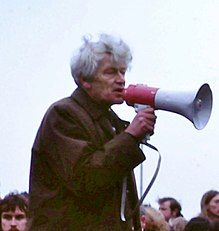
In 1975 the late historian E P Thompson wrote a piece, Going into Europe, in the pre-Murdoch Sunday Times, about the EEC Referendum of that year. It voted 2-1 to keep Britain in the EEC now the expanded EU.
Thompson was not a fan but suggested instead how a real internationlist Europe could be configured. 45 years on some bits are dated but the idea remains of interest, particularly one hopes to the left:
But the opportunity is there, within the logic of our past itinerary. The lines of British culture still run vigourously to that point of change where our traditions and organizations cease to be defensive and become affirmative forces: the country becomes our own. To make that leap, from a market to a society, requires that our people maintain, for a little longer, their own sense of identity, and understanding of the democratic procedures available to them. It requires also the holding open of every international option: for trade with the developing world, for dialogue with the Communist world, for informal intellectual exchange.
It is fear of this transition – of Money toppled from power – which makes our good bourgeois contort his face into an unlikely expression of internationalism. And, equally, the effecting of this transition is the most substantial contribution to internationalism which our people could make.
That is what we could offer to the European dialogue. And to a Europe which includes Oslo and Belgrade. Long, very long after that, a true idea of ‘Europe’ might return: as a cautious federation of socialist states. It will develop slowly, tetchily, with jealous regard for individual identities. And so it should.


Leave a Reply