
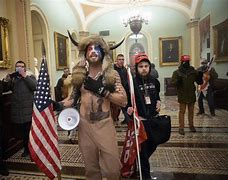
The politics of protest: the ‘mob’ versus the ‘crowd’. 6th January 2021 five years on
Its five years since Trump supporters on 6th January 2021 attacked the US Capitol building. There was a riot and a mob or crowd was involved.
In 2024 Trump hailed it as a glorious day or some such and promised to pardon most of those subsequently jailed if elected President. This he has subsequently done.
Biden meanwhile, taking a brief moment off from backing genocide in Gaza, argued that it was an insurrection. A coup d’etat would have been a better description although interviewed by the Times (4th January 2025) the historian Sir Niall Ferguson who criticised Trump in 2021 but now backs him argued that it was better understood as a sign of unusual COVID pandemic times.
One person’s mob is another person’s crowd
For example protesting outside the house of someone who has transgressed many people’s understanding of what might be termed a ‘moral economy’ is a British tradition stretching back over many centuries. It was not however by any means always politically progressive, so controversy over it is also something not recent. It started again with peaceful protests outside the Constituency Offices of MPs who refused to back a ceasefire in Gaza being elided with attempts to cause physical harm to MPs
The use of the term mob to characterise popular protest dates back at least to Edmund Burke’s view of the French Revolution. As the historian of nineteenth century protest George Rude underlined what reactionaries thought was a mob was in many cases simply a peaceful crowd making reasonable points. If one wants to look for a mob, the activities of the Bullingdon Club are a good place to start.
Events in the US on January 6th 2021 provided a much wider canvass to issues of the politics of protest but a summary of the mob v crowd debate, now history itself, is here:
While George Rude saw in a protest up to a riot the work of the crowd, and broadly progressive intentions and outcomes, E.P. Thompson was less happy with this formulation. He suggested that riots could also contain reactionary elements and the crowd involved in the Gordon Riots would be an obvious example.
I would take Thompson’s side in that debate (if only just) but underline the point above that while we may accept that there may be reactionary elements in crowds which can get involved in riots this doesn’t alter the fact that they happen and need to be understood
E.P. Thompson’s work on food riots points to the reality that the threat of a riot was often more effective than an actual riot. It could cause a reduction in the price of bread or the distribution of hoarded food. When riots did occur very much the same impact was to be found. Hidden food was seized and distributed at low price.
There were other, more obviously political riots, often associated with the Chartists. The Chartists were an organised political force that most certainly did not support riots. It was rather the wider Chartist crowd that participated in such activities, often after provocation from the authorities.
There has been a lot more research and wider perspectives on the crowd since Thompson and Rude looked at the matter in the 1960s and 1970s. Crowds are looked at from the perspective of safety risk management and from psychology as well as history.
Historical research however can provide useful context by looking at who the individuals were involved in mob or crowd protests, what their intention was, how this turned out and what the reaction of authority was. Perhaps needless to say such research is limited because often the only people who can be identified are those who are arrested and any who make public statements about their activities. We now know a good deal about the organised fascist groupings behind the 6th January 2021 attack
Of course the democratic crowd will usually make it clear what it’s about so a lack of clarity may suggest a mob with less clear intent.

 Kmflett's Blog
When you write “ We now know a good deal about the organised fascist groupings behind the 6th January 2021 attack”, do you acknowledge the large number of FBI agents and other assets of the state? Have you seen any of the video of members of the crowd recognising and denouncing “Fed” agent provocateurs? Do you really think that there was an insurrection or attempted coup but everyone forgot to bring their guns?