
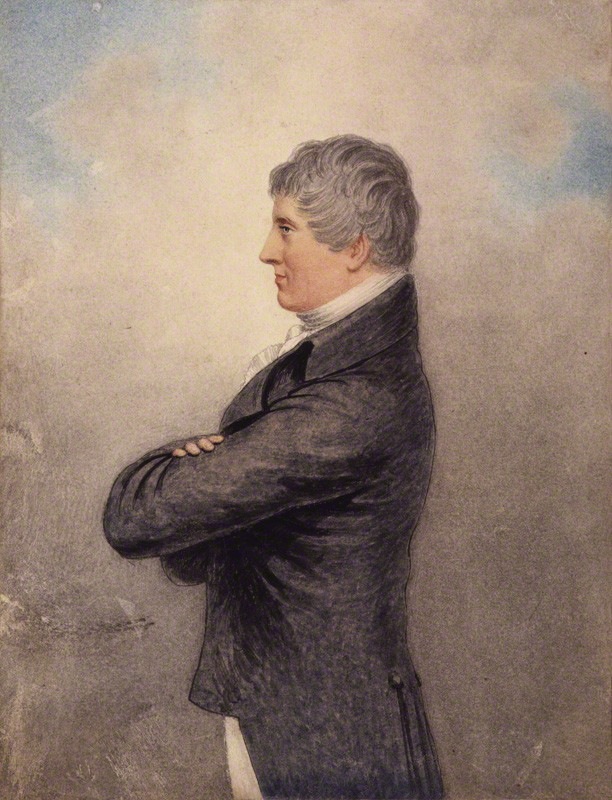
Henry Hunt
Galloway wins at Rochdale, the return of the radical ‘Gentleman Leader’
George Galloway’s victory at Rochdale is impressive, whether you like the politics or not. He circulated a 10 point programme during the campaign. The first point mentioned Gaza, the other nine focused on improving public services in a mildly social democratic way, although references to ‘high quality’ did suggest that a management consultant might have had hand in writing it.
In 2024 Galloway is mildly on the left on economic issues (as he always has been) and very much on the right on social issues.
He is and has been a consistent anti-imperialist and this is primarily what the Rochdale victory is about. It underlines that while Westminster can manage no more than waffle on Gaza it is out of touch with those many thousands who have marched and protested about Israel’s actions. It is a powerful signal and a democratic one from the grassroots.
In this context Galloway can be understood as a radical- that is someone who can take positions on the left and the right but is perhaps, certainly historically, identified with one main issue.
In the nineteenth century, leaders such as Henry Hunt and Feargus O’Connor had to have some independent means to be able to tour the country addressing meetings and organising protest.
Hunt, who was the only speaker at Peterloo in 1819 was elected for Preston (1830-33) while O’Connor, the Chartist leader sat as the Nottingham MP (1847-52)
They were known as Gentleman Leaders and they were larger-than-life characters.
Edward Thompson addressed the issue of the strengths and weaknesses of such leadership in the Making of the English Working Class and, no doubt influenced by the events of 1956, noted that there was also a working-class tradition that preferred to avoid having such leaders in the first place.
Some of the activities of Henry Hunt, who was a great leader, can put Thompson’s words in perspective. Hunt was also a businessman, marketing shoe blacking and aromatic herbal tea. He reportedly found some difficulty in dividing his political work from his business affairs.
The Social Democratic Federation (SDF) was the last major redoubt of the Gentleman Leader and it had lots of them, all with facial hair. There was Hyndman, Belfort Bax, Henry Champion and JL Joynes. Suffice to say, they had strengths and also considerable weaknesses.
Once we move into the 20th century, the picture changes. The labour movement developed. While leaders still needed to be a little larger than life, they did not always require independent means.
One example, John S Clarke, was the subject of a biography by the late socialist historian Ray Challinor.
As Challinor pointed out, Clarke was a lion tamer, poet and MP and found no problem in combining these unlikely occupations.
Clarke, born in Jarrow, was a member of the SDF. He joined the Socialist Labour Party because of its focus on industrial work.
He edited the paper of the Clyde Workers Committee, did not join the infant Communist Party of Great Britain and was briefly Labour MP in 1929 for Glasgow Maryhill, where he narrowly avoided death on the maiden voyage of the R101 airship.
In between times, Clarke ran a zoo and wrote popular poems, including The Man In Peterhead about John Maclean.
He was a delegate with Willie Gallagher to the second congress of the Comintern. While there, he found time to pop round to the Kremlin and cure Lenin’s dog of an ailment.
In return, Lenin gave him a signed photograph, something that we associate with current ways of celebrity behaviour.
Challinor argued, with some justification, that the very circumstances that allowed someone to stand out against the tide of ideas in capitalist society and become a radical or socialist leader might also make them do other things which appeared odd or eccentric in the context of that society.
Of course nowadays a figure like Galloway is more likely to be called a populist. Idiosyncratic and iconoclastic, the key message such figures carry- whether on the vote in the nineteenth century or imperialism now can still be a powerful one


Leave a Reply