
Sam Bankman Fried could only operate in an economy that has lost all sense of the moral
Financial swindler Sam Bankman Fried has been sentenced to 25 years in jail. Many lost out in a big way thanks to his activities and it remains unclear how much money they will be able to recover.
Aditya Chakrabortty has written an, as usual, to the point piece on what SBF actually means for politics and economics in 2024:
https://www.theguardian.com/commentisfree/2024/mar/28/sam-bankman-fried-jail-ftx-money
He correctly points out that a Starmer Government might well end up entangled with similar characters to SBF when it looks for those who will fund green and housing projects.
SBF could only really operate in an economy that has lost all sense of the moral. That applies to the US and the UK. In the UK we need only look at the activities of Arriva on the West Coast Main line, British Gas and Thames Water to grasp the point.
The idea of a moral economy is a well worn one. It existed in part in the eighteenth century and the socialist historian E P Thompson researched and wrote about it. It was not a socialist economy but one where the wealthy understood that they had certain obligations to the poor. This meant that the basic necessities of life should be both affordable and available. The poor for their part also understood the deal. When it broke down protest and even riot took place, while the rich for the most part grasped that if it did break down their rule could be at risk.
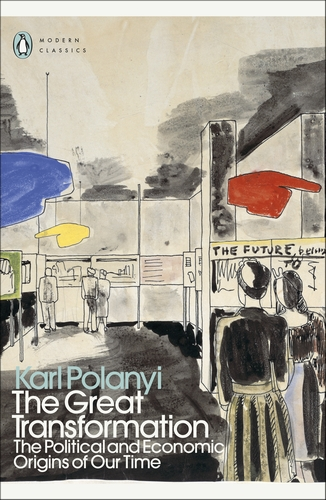
Thompson however did not invent the term moral economy. If anyone did it might have been Karl Polanyi, an Austrian who fled the Nazis and lived in the UK and then the US. In 1944 he published a book the Great Transformation. Later this year it will appear as a Penguin Modern Classic, 80 years on.
Its not certain that Thompson was familiar with the work of Polanyi but it is likely. While his work is often claimed to be social democratic in its perspective, in reality he was probably closer to the post-1956 New Left.
In her recent speech to suit wearers in the City of London Rachel Reeves mentioned Polanyi and the idea of a moral economy. Perhaps she had just been raiding Wiki again. However Blair in 1997 said that Company Law needed to be reformed so that the legal obligation was not just to shareholders and the bottom line but also to wider society. It never happened
If future SBF’s are to be stopped Rachel Reeves will need to make sure it does happen however modestly


In 1975 I asked another member of the ‘post-56 New Left’, Raymond Williams, if he knew Polanyi”s book. He seemed to have heard of it but probably hadn’t read it. I’d read it in the mid-1960s, my parents’copy of the 1945 Gollancz edition, a gift from Polanyi. They’d been part of a 1930s group called ‘the Christian Left’. Nobody I knew in Left politics had read it till the 1990s.