
A History of the Present: Assessing protests for Gaza historically
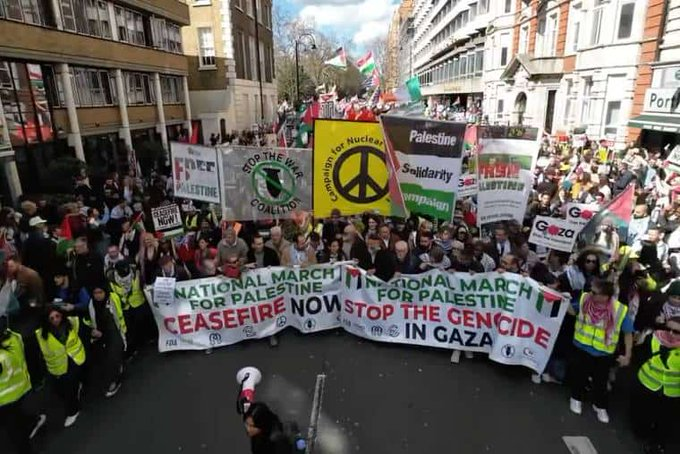
200,000 people marched for Gaza in central London on Easter Saturday. It was the 11th national march since October. Given that numbers are away or at events at Easter and transport is even more unreliable than usual the number was impressive.
It was not course comparable in size to the biggest ever march in British history the 1.5m or so who protested against the Iraq War on 15th February 2003. The march was not a one off, but the sustained level of mass protest is likely to be unique in British history going back to the first ever mass demonstration at Peterloo in Manchester on 16th August 1819.
The importance of marching in London is the impact it makes. Such marches will sometimes get coverage in UK media but they are guaranteed to be noticed around the globe. Britain after all was the former colonial power in Palestine.
That said it’s not just London where protest is happening and this what also makes the Gaza protests unique. On 30th March there was a static protest in Liverpool ,marches in Halifax and Cardiff and a demo at a Manchester venue that had cancelled an evening of Palestinian politics and culture.
It is far too soon to make an historical assessment either of the scale of protests or their impact. But at the same time, as protest needs to continue, there must be some sense of how it fits in historical models and examples of protest.
Perhaps the obvious starting points are the Chartist movement which ran in various formats from 1837 to 1860 or so and the Suffragettes who were active in the first decades of the twentieth century.
An obvious point and one right-wing politicians and media will not want to think about, is that the protests are overwhelmingly peaceful. This was not true of either the Chartists or the Suffragettes. The Chartists had a nearly successful attempt at revolution in Newport in 1839 and a General Strike in 1842. The Suffragettes organised direct action and beyond that various protests which would today be labelled as terrorism.
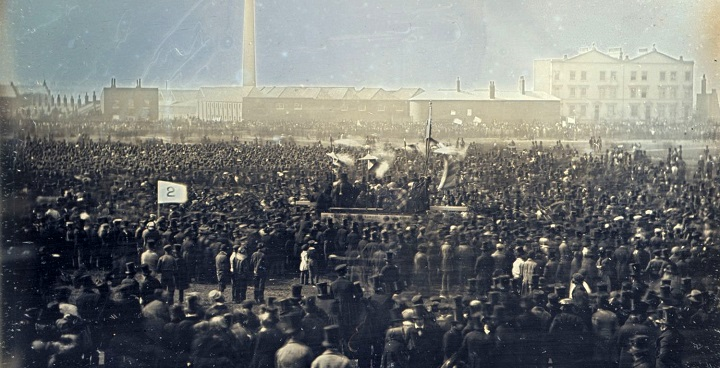
There was a London focus to Chartist protest- for example at Kennington Common on April 10th 1848.Upwards of 100,000 attended before mass train travel was available. In June 1908 300,000 Suffragettes gathered in Hyde Park for what was termed the Big Shout for the vote.
Like the 2003 Iraq War demonstration these were one off events which were also part of wider and long running campaigns.
The 11 national London protests for Gaza in 6 months provisionally suggest an historical specificity and intensity. The Chartists and Suffragettes were both engaged in decade long protests for the vote and more. The Gaza protests have an urgency that suggests a different timescale but the historical link with issues that must be addressed is also there. The need for protest now is urgent but solidarity will go on for years and it has already done well before 2024.
Work in political and historical progress, urgently so.


Leave a Reply