
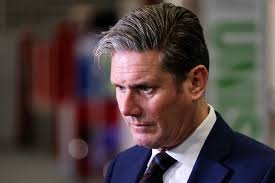
4 years since Starmer was elected Labour leader. Election victory is likely, but why?
Its 4 years (4th April 2020) since Keir Starmer was elected Labour leader. There are a great many things that could be said about what some see as his Great Moving Right Show but in this post I focus on some English empiricism.
What interests many voters who have other things in their lives than pondering the state of the left is whether Starmer can lead Labour to eject the Tories from office. We’ll only find out when an Election is called obviously but in the meantime polls provide a very rough guide.
Labour (Starmer’s personal standing is another matter) have been ahead in the polls since November 2021 and currently has a 20% lead over the Tories. A YouGov poll taken on 3rd April 2024 has predicted a Labour majority of 154.
Poll leads though are not everything. They usually appear because the incumbent Government is messing things up. They are maintained to a successful Election victory if the opposition in this case Labour is able in various ways to harness the discontent to a positive mood to support it
We can see this in the period 1992-1997
We can’t obviously be sure what moves the polls but I do think that there is some evidence that there are particular events which change people’s minds on a long-term basis, as Black Wednesday seems to have done in 1992 and the brief Premiership of Truss in 2022 may also have done.
By 1992 Thatcher had been forced to resign over the Poll Tax debacle and was replaced by John Major. Major, unexpectedly and quite narrowly, beat Labour, led by Neil Kinnock, in a General Election on 9th April 1992. For the few months afterwards the Tories led Labour on average by 5 points in the opinion polls.
Then came Wednesday 16th September 1992, ‘Black Wednesday’. On that day the Tory Government withdrew the pound from the European Exchange Rate Mechanism (ERM). In order to protect the pound Chancellor Lamont raised interest rates from 10% to 12% in the morning, and then up to 15% in the afternoon.
The following day interest rates returned to 10% but the damage was done in terms of electoral standing. Voters with mortgages, perhaps more inclined to vote Tory, had seen the spectre of the cost rising by 50% in a day. If it had happened once clearly it could happen again.
By November 1992 polls were showing ratings of around 30% for the Tories and 50% for Labour. They changed little until the eventual election in 1997. Labour’s lead was nothing to do with Blair, who wasn’t Labour leader in 1992, rather it was the late John Smith, but with an event so potentially cataclysmic in its impact that it stuck in voter’s minds.
It’s worth pointing out (thanks to Lindsey German)that the October 1992 pit closure crisis underlined and amplified the Tory crisis. The Tories had spent the mid-1980s demonising and defeating the miners on pit closures. But when Heseltine tried again in 1992 the mood was very different. Public support swung behind Arthur Scargill and the NUM’s efforts to stop further closures.
Whether you think Starmer is a decent Labour leader or not, it won’t be that much to do with anything he does or doesn’t promote, which is perhaps just as well. What 1992 and after suggests is that it’s about Tory crisis and whether the left and labour movement can galvanise the mood around that which has the real impact in particular on the cost of living and energy crisis. That in turn promotes a mood for change, and one outlet for that (amongst others) is an election.
In short polls, crude though they may be, simply reflect much wider currents in society, and whether Labour can successfully associate itself with and sometimes lead efforts to suggest things can get better. Work in progress or as Starmer refers to it (Mirror 7th April) his mission.


Leave a Reply