
Spurs & Eric Hobsbawm on class & football
I’m a lifelong Spurs fan, living in central Tottenham near enough to the stadium to hear the crowd cheer, or more often groan, when Spurs are playing.
On 14th May Spurs played Manchester City at WHL. As usual I wanted Spurs to win, while doubting on recent form if this was likely. As it happened Spurs had a decent game although they ended up losing 2-0.
Like much else in life there were wider contexts. The Manchester City victory meant they were almost certainly Premiership winners. A defeat would have given Arsenal a chance at that.
Some Spurs fans, tribalists, appeared to be supporting Manchester City because of the Arsenal angle.
The reality is that while the rivalry between Arsenal and Spurs is genuine there is more that unites North London than divides it. Arsenal winning the Premiership would have dented Manchester City’s hegemony at the top. Not something Man City fans would have liked but the hegemony is leading to the Premiership eating itself.
Still London, the North West, South Wales, and parts of Yorkshire and the North-East are the main working class and Labour voting areas in England and Wales (historically, this is not about a current Labour vote). So there is a wider unity here too.
Eric Hobsbawm made the point that football in London from the start has been about class and tribalism, while arguably part of that, is not the best of it
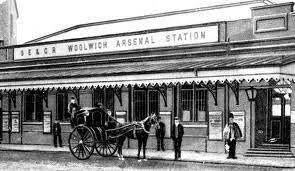
There is not and has never, I think, been a football team bearing the name of London. All the celebrated teams of the capital are named after neighbourhoods, except Arsenal, which moved to North London from its original location as a works club in Woolwich. They belonged to Queens Park, the hills round Crystal Palace, to Charlton, Leyton and Tottenham, or to West Ham—another team which began as a works club.
Now, this way of defining communities is directly relevant to labour movements. Out of the twenty-three metropolitan branches of the Amalgamated Carpenters and Joiners in the 1870s, eighteen actually had the same locality names as either music halls or football teams or both. And if we take an area like Woolwich, it was by general consent a town within a city, a defined community whose working class was based on the great Arsenal, which generated both the football club and the Royal Arsenal Cooperative Society which eventually colonized other parts of London. (The other metropolitan cooperative society of importance, the London, was originally based on the railway workshops in Stratford.) And if we take West Ham, whose Thames Ironworks generated the famous ‘Hammers’ team, its character as a separate proletarian community was so marked that it was the first district in Greater London to elect a Labour majority on its council, having already, in 1892, elected the socialist Keir Hardie to Parliament by means of a coalition of the Irish with the local Left.
Hobsbawm in his conclusion looked at the impact that changes in Cities, class and employment had on labour politics. He noted that even where divisions existed on the football field, these were often overcome on the political field with a desire to promote a progressive working class politics
For in the big city ‘labour’ was at the best of times never as cohesive as in the smaller industrial communities, even when these were not single-industry settlements. It was always a much more miscellaneous and heterogeneous stratum, held together by a common style of working life—the life of manual work—and by a common consciousness of class, of relative poverty and low status. It was this which allowed labour parties to become simultaneously containers for class and other minority interests. They were, like the Democratic Party in the usa, alliances of minority interests, but they were not only such alliances, since the concept of a ‘working class’ provided a common denominator for otherwise different and even divergent groups. This was so even when labour movements did not stress their special appeal to minorities such as, say, the Irish or the Jews. Protestants and Catholics in Glasgow, whose mutual hatreds are evident on the football field, could both join together in a single camp for purposes of city politics.
Passages in bold From New Left Review No 1/166 November/December 1987 Labour in the Great City


Leave a Reply