
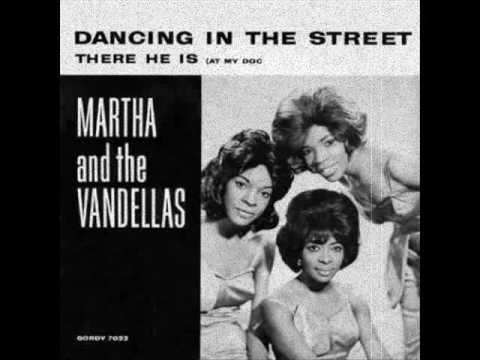
From Martha Reeves to France on July 7th: dancing in the streets
Before the age of visual mass broadcast media- initially TV- significant events, for example Labour’s 1945 Election victory were celebrated by huge numbers in the streets.
Street protests and demonstrations didn’t go away as television to a degree ‘privatised’ leisure but the physical act of political celebration seemed to diminish.
Tony Blair’s Election victory in May 1997 was certainly celebrated, as much for the end of the Tories as for what was to come perhaps, but the crowds outside Downing St were modest and perhaps not entirely spontaneous. The same was true of Keir Starmer’s arrival there on 5th July
Few crowds are entirely or event mostly spontaneous (even if the organisers are unknown) but if large numbers turn up that is another matter.
There is an historical benchmark for such occasions and it is whether or not people were to be found dancing in the streets.
Barbara Ehrenreich has written a book about dancing being an expression of collective joy stretching back to ancient societies.
Ehrenreich uses primarily an anthropological framework for her commentary. It is clear that people coming together in a crowd to mark important occasions and to celebrate in certain ways such as dancing and music is a very old tradition indeed.
In more recent times this became in many cases celebration through the rituals of Carnival, a moment when traditional constraints to behaviour could be loosened.
Not all such occasions have been expressions of collective joy which opened towards the political left. The English tradition of Rough Music which was certainly a collective expression of a popular mood as a crowd gathered to make a noise and focus on those who had transgressed expected behaviour in some ways, was sometimes reactionary.
The modern usage of the term has been more specific and can probably be dated back to the Martha Reeves and the Vandellas 1964 Tamla Motown record Dancing in the Streets.
The song was a massive hit for the group and Motown and is still played over 50 years after its release.
Yet the meaning of the song was both disputed and perhaps left deliberately unclear.
When Martha Reeves came to England it is suggested that a reporter asked her if the song was about riot. She replied that this was absurd. It was of course about having a celebratory party.
However when the oppressed in society decide to take action against their oppressors there is often a moment of celebration of collective power about it.
A view is that Dancing in the Streets was certainly about, for a wider public, enjoying yourself. It also sent a message to the substantial black audience for Motown records that getting out on the streets around the civil rights movement was not just appropriate but potentially enjoyable.
Since then the present author has heard numerous claims that people were dancing in the streets at this or that political event or occasion.
Until quite recently unless you were there in person it has been very difficult to prove.
The general view is that in societies where participation in formal politics has often been in decline it would seem exceptional that people could summon up sufficient enthusiasm to dance in the streets at a political event.
In 2024 social media comes to our aid. Of course careful checks are needed to make sure some twerp for their own reasons isn’t posting a clip of something that didn’t happen at that moment.
But if you check social media following the announcement the second round of voting for the French Parliament on 7th July you can find instances of people dancing in the street and, perhaps even better, of Jean Luc Melenchon leading a huge crowd in central Paris in singing the Internationale. It was rather a pity that didn’t also sing dancing in the street


Leave a Reply