
From Havana to Hyde Park: The Stones July 1969
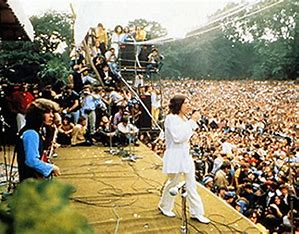
From Havana to Hyde Park: The Stones in the Park 5 July 1969
July 2024 marks the 55th anniversary of the concert the Rolling Stones played there on July 5th 1969
The Stones 1969 Hyde Park concert came just two days after the death of founder member of the band Brian Jones. At the start of their Stones set Mick Jagger dressed in a white dress read lines from Shelley, and cabbage white butterflies were released into the crowd.
The concerts were a huge media event not least because by 1969, with the Beatles on the verge of splitting up, and newer groups such as Led Zeppelin and Pink Floyd, yet to achieve ‘superstar’ status, the Stones were arguably the biggest rock and roll attraction in the world
By all accounts- and recordings of the concert are widely available- the band, who had not played live to a public audience since 1967, did not play well or even in some cases in tune.
It was perhaps the occasion and the crowd that were more important than the music itself.
Granada TV captured the day on film and their main emphasis was on the people who had turned up to listen not those on the stage.
Writing of the concert in the sociological magazine New Society the following week Geoffrey Cannon described it as ‘A World Turned Upside Down’.
This was the end of the 1960s, the age of CND, Vietnam and the Paris revolt just the year before. The event was certainly far more political [at least with a small ‘p’] than it might be expected to be today. There are memoirs which show that revolutionary students leafleted some of the crowd for example, although with what impact is less clear.
Writing in The Guardian, Richard Gott claimed the Stones in the Park was an epoch changing event in a way that the Investiture of Prince Charles at Caernafon Castle on 30th June 1969 had not been.
55 years on Prince Charles is King but the Rolling Stones are still a rock band although both are not only considerably older and also much wealthier. Neither has changed the world in any particularly obvious or helpful way.
Richard Gott is still around too and the interesting point about his assessment of that July Day five and half decades ago is that he was not then, and isn’t now, some kind of woolly liberal overcome with surface phenomena. Gott had been a leading anti-Vietnam War campaigner and was to be the Editor of the Pelican Latin American series of books which chronicled social change and revolution. Gott had met and discussed strategy with Che Guevara in Havana in 1963.
Advertisement
Privacy Settings
Gott suggested that the concert seemed to a political activist like himself to be ‘like the climax of an Aldermaston march though without the politics’. At the start in his tribute to Brian Jones Gott argues it was like ‘Fidel Jagger haranguing the assembled workers lately in from the cane fields’
It was of course journalistic hyperbole but it captures well the spirit of the end of the 1960s.
Gott makes the point that ‘those who have come to listen are as important as they who have come to play’, quoting as an authority for this point the US political activist Allen Ginsberg.
He goes on to look at the wider canvass of 1969 when Harold Wilson’s Labour Government was in Office. He argues that perhaps despite the efforts of the administration those attending were ‘less disciplined and puritanical’ than the early days of CND.
Perhaps surprisingly Tony Benn doesn’t mark the concert in his Diary even though he was more often than not alive to such events in its pages
Gott saw a rebellion that he argued would characterise the 1970s.
In a sense he was right. The first years of the 1970s under Heath’s Tory Government saw a wave of industrial revolt unmatched since the Great Unrest before World War One.
Yet the Rolling Stones played no part in this and the counterculture which was such a feature of that Hyde Park day 55 years ago was largely incidental to it as well.
Even so many of those who gathered in Hyde Park 55 years ago would undoubtedly have been participants in those events and some, a much smaller number, would have been political activists trying to give them direction.
The reality is that while these days it can be argued that rock music has very nearly been co-opted into the framework of the market system, 55 years ago in Hyde Park there were still gaps and weak links in the chain


Leave a Reply