
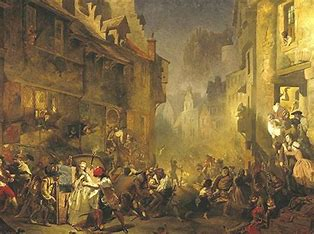
From Church and King mobs, 1780s to ‘we want our country back’ mobs 2020s
Posting on the far right mob thuggery at various English locations I was tweeted by someone who rightly pointed out that while left-wing protest has been chronicled by a lot of historians that of the right has not (leaving aside the often related but specific activities of fascists).
In fact as I noted in response most protest falls into neither category but is often about specific issues- for example climate change.
E P Thompson challenged by a review of the book by Geoffrey Best noted in the 1968 postscript to the Making of the English Working Class that the activities of those opposed to radical and democratic reform and organised labour were too little written about and too little understood.
Thompson perhaps undersold himself since references to Church and King mobs stretch into double figures in the Making. Thompson’s 1968 point was that despite reactionary opposition a class conscious working class still developed.
Church and King was one of the main slogans of gangs of loyalists who opposed supporters of democratic politics- Corresponding Societies- and the French Revolution in the last period of the eighteenth and the first period of the nineteenth century. Other slogans focused on Tom Paine the author of the Rights of Man.
The gangs could range in size from hundreds to on occasion. They were inevitably fuelled by drink and they were violent. Homes of reformers were attacked as were meetings in pubs. In most cases the police and magistrates who supported them did nothing. The aim was to disrupt, terrify and destroy radical organisation.
Where the early labour movement and radicalism were stronger, as Thompson noted of London, Church and King mobs were less effective.
One did operate in the Gordon Riot in 1780 in central London. Encouraged by authority the mob targeted the houses of religious dissenters. However it moved on to free prisoners at Newgate and then marched on the Bank of England. The army were called out.
The motivations of the Church and King mob were mixed. Against reform and the French Revolution some at least saw themselves as upholding the limited liberties of the Freeborn Englishman.
We can trace the reactionary mob through British history from anti-Irish riots in the 1850s to anti-Jewish ones in the early twentieth century. There are many more example almost always focused on violent protests against minorities.
A far right and often violent mob backed by sections of authority has been a persistent feature of modern British history. Mass and organised opposition may not get rid of their sentiments but it can stop their activity.


Leave a Reply