
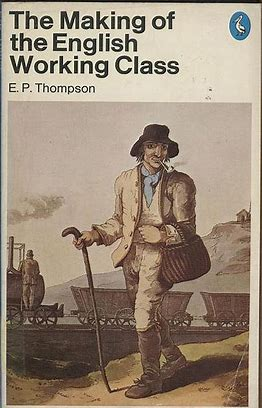
E P Thompson noted in the 1980 Preface to a new edition of the Making of the English Working Class that he signed a contract with Gollancz in August 1959 for a book ‘Working Class Politics 1790-1921’. In August 1963 he completed the introduction to the finished book, almost a thousand pages long, which took the history up to 1832.
There is however something about August in the early making of the English Working Class. Peterloo took place in central Manchester on Monday 16th August 1819. Twenty years later the Chartist Grand National Holiday commenced on Monday 12th August 1839. In 1848 the last armed uprising on English soil, Chartist and Irish Confederate inspired was on 16th August, although it was a Wednesday.
We think of August now as a holiday period, with school holidays and an August Bank Holiday which became law in 1871. The right to a paid holiday in the UK did not come until the 1938 Act which of course was the result of trade union campigning.
However in the first half of the nineteenth century in areas with mills and manufacturing there was Wakes Weeks. Workplaces were closed for a week and workers took an (unpaid) holiday. They varied in their timing between June and September but certainly included August.
This may explain the timing of Peterloo and the Grand National Holiday, although in addition the practice of Saint Monday in artisanal trades saw Monday as an extension of the weekend. E P Thompson however was more than likely just starting and finishing the Making in his paid summer holidays

 Kmflett's Blog

Leave a comment