
Below is a slightly edited version of a post from September 2014
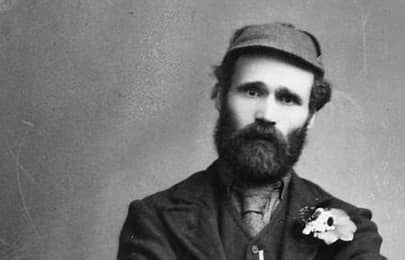
Keir Hardie’s original base, from the late 1870s, was amongst first the Lanarkshire and then the Ayrshire miners in Scotland. He was a trade unionist, a full time organiser, with a Lib-Lab perspective on the world that focused strongly on issues of respectability such as temperance and religious observance. He also had a beard.
Hardie stood as an independent labour candidate election in Lanark in April 1888 and in August of the same year he became the first Secretary of the new Scottish Labour Party.
A career in Scottish politics surely beckoned. Except that it didn’t because that wasn’t quite how Hardie saw the world.
In 1892 he travelled to the East End of London, another centre of a newly organising working class, to stand, without Liberal opposition, as a labour candidate for Westminster. Hardie won and in August 1892 took his seat as an MP.
Questions were asked about where Hardie’s campaign funds came from. While Hardie presented himself as moving beyond his trade union background, as Caroline Benn’s definitive biography underlines, unemployment was even more of an issue in West Ham than it was in Ayrshire. The Scottish miners understood the link well enough and certainly gave some of the money for Hardie’s election.
The following year he was one of those who formed the Independent Labour Party.
When it came to the 1900 General Election Hardie in era when it was possible to stand in more than one seat was nominated in Preston and Merthyr in South Wales.
Preston was never likely at this point, on a still restricted franchise, to return a labour MP.
Hardie’s chances in Merthyr weren’t thought to be too good either. After all he was a Scot who had held a seat in London’s East End and was largely unknown in the area.
Hardie however had two things going for him. Firstly he had been a miner and a miner’s union official. Merthyr was a mining seat, but one which remained firmly Lib-Lab. This however was the period when the new Trades Councils were being formed in the area, and they were often a bedrock of support for independent labour politics
In a two member seat Hardie was elected MP and in the 1906 General Election was re-elected with an increased majority.
During his period as MP for West Ham and Merthyr when not representing his constituents in London, Hardie continued to live in Cumnock in Scotland where he had been based as a union official.
The historical point that Hardie’s trajectory as a union and labour activist demonstrates is that while issues of national independence are important ones, class politics transcends boundaries.
I am Scottish- my father a Communist- was born on Clydebank. However I live in London and Cardiff so I didn’t have a vote on 18th September 2014. If I had one it would be hard to envisage why one would have voted to keep the imperial structure of the United Kingdom as it currently is. At the same time the thought of a smiling Alex Salmond on 19th September 2014 was just as upsetting as that of a smiling David Cameron in May 2015. Neither man of course has ever had a beard, unlike Keir Hardie.
Whichever way you look at it, perhaps the debates and the energy of the campaign will provoke an upsurge not in the Establishment politics of Salmond and Cameron, but movement at the grassroots, from below. That is what all those in authority in London and Edinburgh really fear.
The spectre of united working class internationalism that Hardie, and his beard, in a way personified.


Leave a Reply