
Below is an extract from a speech by Kemi Badenoch at the Tory Conference in Birmingham on 30th September 2024. As the Guardian reported it isn’t exactly in accord with reality. When Badenoch arrived in the UK she stayed with a family friend in Wimbledon. Bed and board were free. The job at McDonalds in central Wimbledon was on some evenings and weekends, similar to the kind of work students do to earn some cash. I did it myself stacking shelves and operating the till at Sainsburys in the 1970s.
Badenoch is now on the final members ballot for the Tory leadership. Her relationship with reality and understanding of the class war may, or may not, interest the remaining Tory membership
It wasn’t working at McDonald’s that made me working class. It was an example of how I had become working class.
I wasn’t working there as a weekend job or part time. That was my job. I was going to college, part-time, going to an FE college, and I had left Nigeria, where I’d had a middle class life, driven to school every day, and the first time I ever went on a bus was in this country. But I couldn’t even afford bus money most of the time. I had to walk everywhere.
Sometimes I was hungry. I was on my own. I had a place to live, but I had to do everything myself at a very young age. If that is not working class, I didn’t know what working classes is.
The working classes are the people who have to work for a living, otherwise they will be in trouble. They are people who don’t necessarily have big savings or a family that can look after them.
The working class is not a thing or a category. It is defined by a relationship with and often a struggle against other classes, mainly the ruling class.
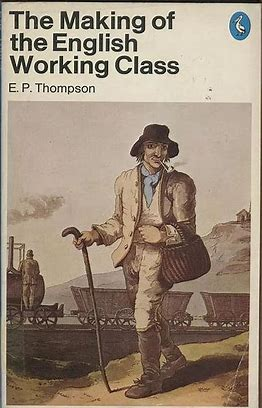
E P Thompson in the Making of the English Working Class saw a relationship, a struggle, a movement. Something to be involved in, not comment on.
‘class is not this or that part of the machine, but the way the machine works once it is set in motion, not this or that interest, but the friction of interests-the movement itself, the heat, the thundering noise‘
Postscript to Paperback Edition, May 1968


Leave a Reply