
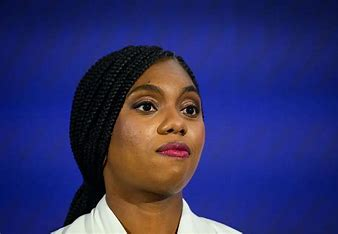
Does a Badenoch leadership contest mean the worst Tory split since 1846/7
The media spend much time obsessing about splits in and from the Labour Party. Historically the Party has had two significant splits. The first in 1931 when Ramsay MacDonald quit to head a (largely Tory) National Government. The second in 1981 when the SDP broke away and failed to break the mould of British politics.
The Tories ‘secret weapon’ is often reported to be their class loyalty. Divisions may be serious and argument vicious, but not in front of the voters please. That tradition is dead.
However a Tory leadership contest between two figures of the hard right- Badenoch and Jenrick suggests an eventual split may be in progress. The Tory Reform Group, custodians of One Nation Toryism have said they wouldn’t support either candidate. The TRG faction of the Tories is much weaker than in previous decades particularly after Boris Johnson purged leading members in 2019. However if Lee 30p Anderson is even vaguely right that many Tory members have departed for Reform UK Ltd they may still be more significant than thought. Farage was again prospecting for Tory members after Jenrick lost.
Robert Peel, who had a considerable background as a Tory Minister and became Prime Minister for second time in 1841 with the backing of landowners who did not want the Corn Laws (a tax introduced in 1815 on imported wheat that kept domestic bread prices high, likewise profits for farmers) repealed, did in fact repeal them in 1846 with the backing of the Anti-Corn Law League
https://en.wikipedia.org/wiki/Robert_Peel
While the ‘modern’ Liberal Party was not formed until 1858 it was largely their political predecessors who were behind the League.
The organised working class, primarily the Chartists, were only marginally concerned in terms of the organisation of the League pushing instead, in due course successfully, for a Ten Hours Act to reduce the length of the working day. A measure they correctly judged would have more impact on workers lives.
The numerous petitions for repeal of the Corn Laws organised by the League did attract considerable numbers of working-class signatures. Cheaper bread was a demand raised at Peterloo. What the League either didn’t want to do, or failed to, was to involve those working-class voices in its actual campaigning structures
Jacob Rees Mogg, who has a history degree from Oxford, argued in 2018 and again in his 2019 volume The Victorians that Peel’s actions split the Tory Party and this led to them being out of Office for several decades as a result. In this as in so many things Rees Mogg is not entirely right. The Tories did have brief spells in Office in the 1850s and 1860s but not until Disraeli in 1874 were they able to reassert themselves as a dominant Parliamentary force.
The Tory Party of the 1840s was hardly the one we know today. The present shape of the Tory Party was not fully defined until the early twentieth century. The second half of the nineteenth century saw several significant realignments in ruling class politics between Tories and Liberals.
Peel meanwhile broke from the Tories (though not Tory ideas) but died on 29th June 1850 after being thrown from his horse on Constitution Hill. Some of his Parliamentary followers did in due course sit with the Liberals.
Whether the current leadership crisis leads to a reconfiguration of bourgeois parties in Parliament with the Liberal Democrats resurgent, two Tory Parties (reminiscent of splits on the left) or the end of the Tories altogether, who after all have a limited and ageing membership- 131,000 in fact, may become clearer in the weeks and months ahead.
Its not a subject the largely Tory owned and run media are likely to focus on but the Tory tectonic plates may be moving apart.


Leave a Reply