
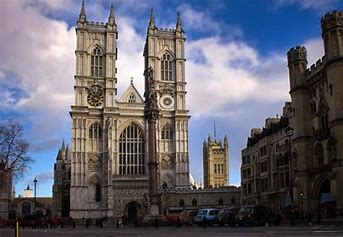
After Justin Welby. When Tony Benn moved the Disestablishment of the Church in the Commons
I am not religious so I have no specific interest in who the Archbishop of Canterbury is, although I thought Rowan Williams and his beard had some interesting things to say.
The resignation of Justin Welby however does raise two points. Firstly it focuses on accountability of those in senior positions in British Society which in recent decades has been more or less entirely absent. Boris Johnson has never been prosecuted and Tony Blair has yet to appear at the Hague.
Secondly the Church of England is the official State Church. In 2024 it would be better if it was not and what the Archbishop of Canterbury did or did not do would be a matter for Church goers alone.
The 2021 Census revealed that for the first time a majority of people did not identify as Christians. The National Secular Society amongst others has called for the Disestablishment of the Church of England. After all if a trade union ballot for industrial action is only valid with 50% minimum support, why not.
In 1991 Tony Benn proposed a Bill in the Commons to Disestablish the Church and generally democratise British institutions. Dismissed at the time some of it has since happened. Other parts might yet
Source Wikipedia
The Commonwealth of Britain Bill was a bill first introduced in the House of Commons in 1991 by Tony Benn, then a Labour Member of Parliament (MP). It was seconded by the future Leader of the Labour Party, Jeremy Corbyn.
The Bill proposed abolishing the British monarchy, with the United Kingdom becoming a “democratic, federal and secular Commonwealth of Britain”, or in effect a republic with a codified constitution. It was introduced by Benn a number of times until Benn’s retirement in 2001, but never achieved a second reading. Under the Bill:
The monarchy would be abolished and the constitutional status of the Crown ended;
The Church of England would be disestablished;
The head of state would be a president, elected by a joint sitting of both Houses of the Commonwealth Parliament;
The functions of the royal prerogative would be transferred to Parliament;
The Privy Council would be abolished, and replaced by a Council of State;
The House of Lords would be replaced by an elected House of the People, with equal representation of men and women;
The House of Commons would similarly have equal representation of men and women;
England, Scotland and Wales would have their own devolved National Parliaments with responsibility for devolved matters as agreed;
County Court judges and magistrates would be elected; and
British jurisdiction over Northern Ireland would be ended.
The judiciary would be reformed and a National Legal Service would be created.
The Constitution would be codified and an amendment process established.
The voting age would be lowered from 18 to 16.
MPs and other officials would swear oaths to the Constitution, not the Crown.


I think that this in unlikely not because it isn’t sensible but because you can’t change the past.