
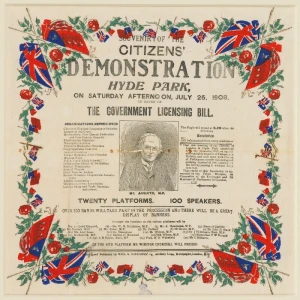
Demonstration in support of the 1908 Bill
On Petitions and their impact
A hard right TV channel and a social media outlet are promoting a petition demanding a new General Election. Apparently hundreds of thousands have signed. Many of course are bots or not UK based. Mr Melon Usk of Washington US and similar does not have a say in UK politics, officially anyway.
Why the petition has gathered publicity beyond bot promotion should concern not just Labour but also the Tories but I’ll post elsewhere on that.
How effective petitions are is debatable. Cynical political campaigners (not me obviously) will tell you that many people will sign a petition simply to get the person wielding it to go away, and would equally happily sign an opposing petition for the same reason. Letters and these days e-mails to MPs from named constituents have more impact. In fact papers in the National Archives indicate that Blair nearly wavered on introducing a hunting ban and that was one reason.
These days of course people can sign on-line but they do have to verify they have signed
The journal Past and Present published on-line an article covering new research into Parliamentary petitions in the Nineteenth Century.
The researchers analysed and where appropriate re-categorised all petitions to Parliament after the 1832 Reform Act through to changes in 1918 which allowed some women the vote for the first time.
They found that 30% of all petitions and all signatures on them in this period were from temperance or pro-drink campaigners.
The temperance campaigners were mainly religious, while pro-drink petitioners came from the licensed trade.
In 1908 when the pro-temperance Liberal Government brought forward a Bill to allow local vetoes on licensing laws 1.2 million signed petitions in favour. However 1.6 million people signed petitions calling on the State to remain neutral on such matters.
The Bill was passed in the Commons but defeated in (the unreformed) House of Lords.
*Petitions, Parliament, and Political Culture. Petitioning the House of Commons 1780-1918. Richard Huzzey & Henry Miller


Leave a Reply