
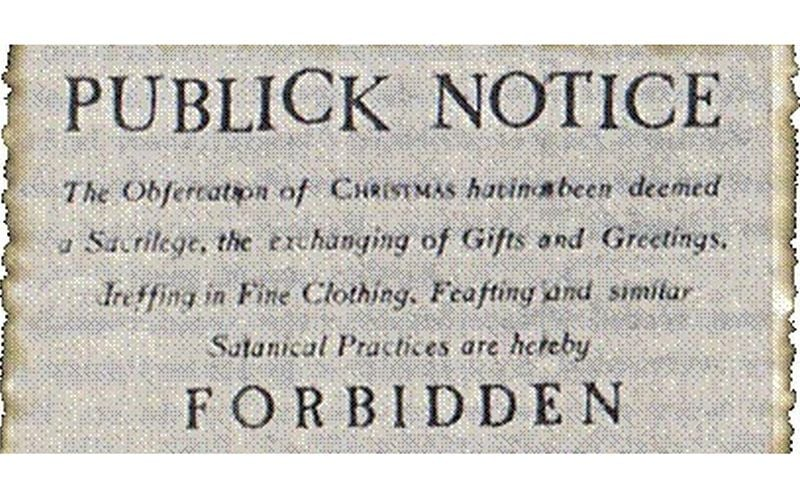
In 1644 Parliament (not Oliver Cromwell) banned the celebration of Christmas. This was reinforced by further legislation in 1647 and implemented by the Commonwealth Governments from 1649-1660. Key elements were that shops should remain open on 25th December and no religious services should take place. Pubs remained open, although some Royalist propaganda from the time suggests that the brewing of strong Christmas ales was at least restricted.
How much this impacted the lives of people who remained more of the peasant class than industrial workers remains unclear. The focus that can be found in historical research is on those of the middling sort and above who were not supporters of Parliament.
One interesting, and even less well documented, impact of the ban, was what happened after the Restoration in 1660. Church services could resume and shops shut. However it seems that the celebration of Christmas did not resume to a great extent. As Judith Flanders notes in Consuming Passions ‘from the seventeenth century Christmas had been in hibernation’. She was referring to the late 1830s when an early work of Charles Dickens reinvented traditions at Christmas that had long gone unobserved.
Between 1790 and 1836 The Times made no reference at all to Christmas in 20 of those years and in other years the references were cursory. In 1833 a regular meeting of the (Tory) Carlton Club in London was held on Christmas Day and while only three people were in attendance, the reasons for absence did not include Christmas festivities. In 1837 the Court Circular (still to be found in The Times) listed a meeting between the Commander of Forces and the Colonial Secretary on Christmas Day. It was a purely routine meeting.
The long lasting impact of the Parliamentary Acts banning Christmas in 1644 and 1647 does suggest that it was not a hugely popular festival and its reinvention in the 1840s, two centuries on, had a strong commercial focus.


Leave a Reply