
The work of Raphael Samuel and the importance of public history
The inaugural National Humanities Lecture took place at the University of London (School of Advanced Studies) on Tuesday evening.
Over 1,000 people attended in person and on-line to hear David OIusoga speak on the subject. It was streamed on YouTube so hopefully a recording will be made available.
Olusoga appropriately focused on history beyond the academic but also rooted in the best academic practices. He noted that family history was the most popular form of research outside of the academy but that history of particular houses, no doubt promoted by his own House in Time series, is also now popular as well.
He emphasised the importance of going into archives and looking at documents and records, the methods of the research historian, to open up these areas of history for individuals. His work on slavery and slave owners is a case in point but he also highlighted work in which he had played a part in identifying where soldiers of colour who had fought and died for Britain were actually buried. A subject which had more or less been ignored by the War Graves Commission until an historical focus was brought to it.
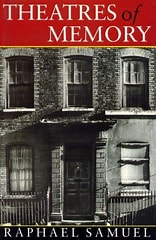
Olusoga also referenced the work of the late Raphael Samuel (1934-1996) in promoting public histories. His work with History Workshop and at Ruskin emphasised getting students to engage with history by looking at original sources and documents. Books like Theatres of Memory, which Olusoga referenced, take a much wider historical focus on the everyday than was traditionally the case in academic monographs.
As a convenor of the socialist history seminar at the Institute of Historical Research (University of London) I have been endeavouring to do a similar thing since 1995.
The seminar is based with one foot in the academy, and we expect academic rigour at seminars, but one foot in the wider socialist, labour and activist movement. The London Socialist Historians Group which provides the wider framework to the seminar, looks to focus on people who are active in the wider movement (as well as supporting the struggles of the UCU in the academy) because they are both our audience and also potential seminar paper givers.
It’s a different focus to the one David Olusoga brought to the subject on Monday but I’d argue an equally important one


Leave a Reply