
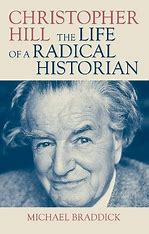
Below are extracts from a review of a new (and the only) biography of the historian Christopher Hill written by Richard J Evans and published in the New Statesman. Its paywalled hence the extracts.
Evans has written a very good biography of Eric Hobsbawm and is critical of the Hill book for I think in summary being a little dry. I’m not sure Hill was quite as unwilling to engage with the wider world as Evans suggests. I spoke to him on several occasions as, at that time, a more or less obscure socialist historian (a status I have maintained)
The extracts relate to Evans assessment of the impact the British Marxist Historians had on historical research and studies more broadly. Evans doesn’t mention but might have the journal Past and Present.
He argues that while the BMHs were well aware of the link between political theory and practice in Marxist thought only E P Thompson really carried this through. I think John Saville also deserves a mention but it’s an interesting point…..
My A-Level History went well, thanks not least to my reading of Hill’s work, and I was duly accepted to Oxford to study the subject. Of course, the first thing I did was to make a beeline to one of Hill’s undergraduate lectures at Balliol College, where he was then Master. Nothing but disappointment awaited, however. He was a terrible lecturer – stuttering, hesitant, soft-spoken, showing none of the energy and power exhibited in his written work. I gave up quickly enough, and went off to hear Keith Thomas instead, a far more cogent and compelling teacher. At the same time, however, I discovered that Hill was only one of a whole group of British historians who were propagating a novel and exhilarating approach to modern British history: men like Eric Hobsbawm, Victor Kiernan, John Savile, Rodney Hilton, Raphael Samuel, and of course Edward Thompson. It was above all they who made the late 1960s and early 1970s such an exciting time to study History at university.
A good deal of the best work of the English Marxist historians focused on restoring dignity and agency to the forgotten lower and lowest classes in history. This ranged from the Diggers, Levellers and other socially radical sectarians in Hill’s The World Turned Upside Down (1975) to the European peasant movements of Hobsbawm’s Primitive Rebels (1959), and above all Thompson’s The Making of the English Working Class (1963), with its declared aim “ to rescue the poor stockinger, the Luddite cropper, the ‘obsolete’ hand-loom weaver, the ‘utopian’ artisan, and even the deluded follower of Joanna Southcott, from the enormous condescension of posterity”.
The impact of this vanguard of historians upon my own, “boomer” generation, was enormous, informing the many ways in which we approached the past and the evidential traces it left behind: not any more as a set of structures and processes that followed “scientific” laws as the Communists proposed, but still interconnected in myriad and comprehensible ways. More surprisingly, perhaps, their legacy also lies in their clarity of exposition, free of jargon and pretension, which reflected their determination to address and engage with the minds of readers far beyond the world of academia – a model which my own generation tried to follow, and which our younger colleagues would do well to remember.
Richard J Evans, New Statesman


Obscure arguably important definitely