
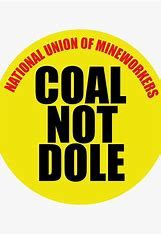
Its 40 years since the end of the 1984/5 miners’ strike on 3rd March 1985.
The miners returned to work, after a vote of representatives, undefeated and with banners and heads held high.
The reality is however that it did represent a very serious defeat for the labour movement.
Depending on your age this is either an event that you remember well or something that means little to you (although it should, see below).
I was active in the strike, both at Easington Colliery in Durham and in building London Support Groups so I have my own memories.
Much has been written about the strike but perhaps a key point is to look at the legacy. Where, for example, are ‘they’ now.
Mostly we don’t know. But for some we do have details.
For example Sian James, whose character is featured in the excellent film Pride about Lesbians and Gay Support the Miners, went on to become a South Wales Labour MP.
Kim Howells who was a South Wales NUM official in 1984/5 also went on to become a Labour MP, of a rather different sort, but stood down in 2010.
There is not enough about the miners support groups formed in that year though LSGM remains active now.
The politics of it is important too.
Mostly lost now, but it will be well remembered by those active at the time, was the fact that Arthur Scargill and the NUM did not ballot before the strike. Democracy is hugely important in the labour movement but so is defending jobs and livelihoods. Mrs Thatcher’s Government balloted no one before trying to push through its pit closure programme.
The defeat after 3rd March 1985 had its consequences. Thatcher went on to attack and defeat the print unions at Wapping.
New Labour also had its origins in precisely this period. If anyone cares to look at the South Wales NUM papers at Swansea University as I have done you will find Kim Howells arguing in 1985 political positions that became mainstream in the Blair years.
The reality is rather different.
As EP Thompson underlined in a footnote on an essay on the moral economy in Customs in Common (1991)the miners fought for a moral economy that said that jobs and communities mattered more than the market. They fought hard but they lost. We are still paying the price but the fight is far from over.


Leave a Reply