
Reform UK & the working class vote in historical perspective
The continued polling success of Nigel Farage’s political business Reform UK has raised the question of whether it is attracting Labour voters and if it has a wider appeal to working class voters.
There is a history to these questions which research on the July 2024 election provides some pointers to. A group of researchers under the label Persuasion found that 75% of Reform voters at the last General Election had never voted Labour, going back to the 2005 Election. Of disillusioned Labour voters most looked not to Reform but to the Greens and Liberal Democrats
Tim Bale’s team of election researchers at Queen Mary College looked who the Reform membership is. They found that most are middle aged, middle class and often small business people. This can in some circumstances be a breeding ground for fascism but in fact it looks a lot more like the traditional base of the Tory Party.
This is a better place to start when considering whether workers are attracted to Reform.
Labour won its first Parliamentary seats in 1906 but it took time to establish itself as an electoral presence across England. This was largely in place by the early 1950s- Labour won 14 million votes at the 1951 Election- but, for example while Tory Councillors in Liverpool are now extinct, the Tories controlled the City for much of the twentieth century until the early 1970s.
This should caution against views that see Labour’s political presence and working class support for it as something that has always existed.
In fact no sooner had Labour consolidated itself as the main working class electoral party in England than the position was challenged. The 1959 Election was lost, although a year earlier it appeared to be going Labour’s way and while Harold Wilson won in 1964 it was by the smallest of margins
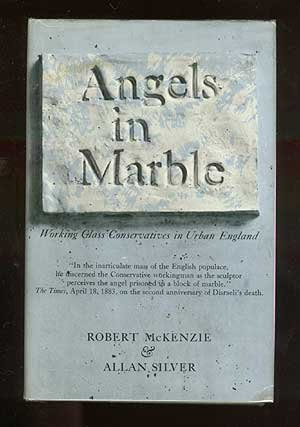
Two strands of understanding the working class vote can be identified from this point. The first was several studies which looked at workers who were anti-socialist and mostly voted Tory. Typically they might argue that taxes were too high and they wanted to be able to spend more of the money they earned. McKenzie and Silver’s book Angels in Marble (1968) looked at working class conservatism in urban England. Lockwood’s Black Coated Worker (1958) conversely examined clerical workers, typically thought to be conservative, and tracked the rise of trade unionism as their economic position changed.
The second strand looked at a drift away from Labour voting, as the nature of work changed and with it the experience of workers.
After the 1959 Election defeat Mark Abrams published Must Labour Lose. It appeared as a Penguin paperback. The argument was that core Labour policies, for example nationalisation, no longer appealed to workers who aspired to develop their status. One notable impact of this was the change in name of the Daily Herald to the Sun
Later came Eric Hobsbawm’s The Forward March of Labour Halted (1981) again after a Labour Election defeat to Thatcher in 1979 it brought up to date the argument that the working class was changing and the traditional Labour vote was declining
What conclusions can be drawn from this?
Firstly that there has been a section of working class voters who support right-wing politics. These are a minority. Secondly that the Labour vote, and indeed votes to the wider left, are not static. A small amount may drift to the right, perhaps even Reform.
The key point however is that class and class votes are not static and fixed for all time. There is a constant flux and interaction of class forces, where socialists have the ability to intervene
This post originally appeared in the Morning Star


Leave a Reply