
Zarah Sultana quits Labour to form a new left party. Historically a rare departure
Zarah Sultana who has been suspended as a Labour MP for a year has quit the Party and announced the intention to form a new left party with Jeremy Corbyn and others. Of course there is already a debate about whether this is a good idea and whether it can work.
This post however looks at some Labour Party history, What Sultana has done is historically both unusual and significant.
There have been significant and less significant splits from Labour in the 50 years. The SDP departed in 1981, made a big impact in the 1983 Election- primarily to ensure the return of Margaret Thatcher to No.10- and dissolved itself into the Liberal Democrats in 1988. In 2019 Change UK, which also comprised a few Tory MPs split from Labour and promptly disappeared from view.
On the left matters have developed, in most cases, a bit differently
Nye Bevan and several other MPs were expelled in March 1939 for advocating a popular front against Hitler and working with the Communist Party and others. He was re-admitted in December 1939 after agreeing not to do this. However he remained a left-wing critic of the Government (when not a Minister himself) and came close to expulsion again on several occasions in the 1950s.
His biographer and successor to his Parliamentary seat in Ebbw Vale Michael Foot had the Labour Whip withdrawn by right-wing leader Hugh Gaitskell for voting against military spending estimates in 1961. It was not restored until Harold Wilson became leader in 1963.
In this period 1930s to 1960s leading left Labour figures had a rocky relationship with the Labour leadership but remained mostly within the party.
In the more recent past the Labour Broad Church has become significantly less broad.
Dave Nellist and Terry Fields, supporters of the then Militant were expelled from Labour in the Kinnock purge in 1991. They lost their seats at the 1992 Election and subsequently became supporters of the Socialist Party, essentially a rebadge of the Militant outside of Labour.
More recently in 2003 George Galloway then the Labour MP for Glasgow Kelvin was booted out by Tony Blair for opposing the war in Iraq. Galloway subsequently became an MP for the short lived left of Labour party, Respect in 2005.
Moving closer still to the present day former Labour leader Jeremy Corbyn was eventually expelled from Labour, essentially on the grounds his left-wing politics were no longer welcome. It is in stark contrast to how Nye Bevan and Michael Foot fared in earlier periods. Corbyn subsequently stood as an independent at the 2024 Election and retained his seat.
All of this underlines the historically significant nature of Zarah Sultana’s decision. The only other example I can find is that of Eddie Milne. Milne was Labour MP for Blyth from 1960 to 1974. An USDAW official he was not particularly identified with the left. However he became increasingly concerned about corruption in north-east Labour politics. The story is fictionalised in Our Friends in the North. Milne was deselected just before the February 1974 Election but stood and won the seat as an independent. However at the October 1974 Election he lost. He had a group of supporters who won Council seats for a period in the later 1970s.
One might argue that while Milne departed due to financial corruption, Sultana has left because of political corruption in terms of how Labour is currently run, de-selection and suspension coming from similar parts of the rule book as it were.
Sultana’s decision does underline the historical specificity of Starmer’s Labour. In a first past the post electoral system a party that can’t bring together a broad range of opinion may struggle, as the Tories found out in 2024.
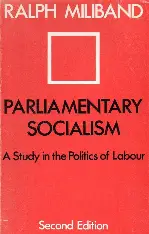
As much to the point a new party developing from a direct split to the left from Labour is, in the last 125 years, a rare and very nearly a unique event. The era of Parliamentary Socialism where as Ralph Miliband noted (1961) Labour was almost the most dogmatic of parties not about socialism but about Parliamentary processes may be drawing to a conclusion


One parallel you omit is Dick Taverne, who having been de-selected and unhappy with Labour’s policy on the Common Market, resigned from the Party and formed the Democratic Labour Party. He did have the decency to stand down as a MP first and fight a by-election under the new banner, which he won (albeit it was a relatively short-lived victory). It remains to be seen whether Zarah Sultana will follow suit.
I didnt mention Taverne because like the SDP who in some ways he prefigured he did not split to the left. I also swerved Oswald Mosley’s split to the New Party which before turning to fascism might briefly have been considered left, or indeed the history of CP attempts to affiliate to Labour in the 1920s. or the decision of the ILP to quit Labour in the early 1930s. All of these have been quite well studied but I’m not sure they add anything to the historical point I’m making. If time allows I may do a follow up piece on what specific conditions promote splits to the left, where these examples would be relevant