
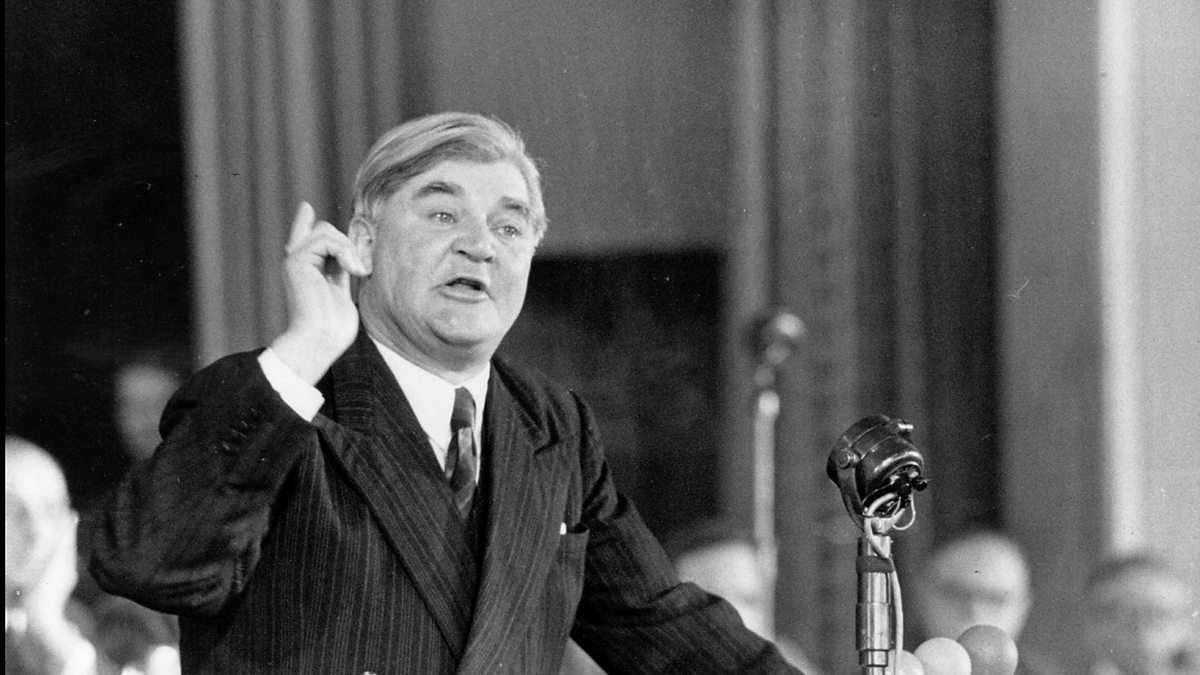
The Labour Church & persistent rebels. From Nye Bevan and Michael Foot on
Historically political defections in Britain have tended to go from left to right. Beyond individual renegades there are two significant markers, Ramsay MacDonald’s decision to split Labour and form a National Government in 1931 and the departure of right-wing Labour MPs to the SDP in the early 1980s.
The 1930s also offered two further examples of significant splits. The first was Oswald Mosley’s New Party which led to fascism. The second was the ILP which tried to re-create an independent socialist presence outside of Labour but was unable to do so
Keir Starmer has reversed the process. Seven MPs were suspended in 2024 for voting against a Welfare issue, they wanted the two child benefit cap scrapped. Four have subsequently regained the Whip, two remain suspended and one Zarah Sultana has quit Labour with plans to form a new left grouping. On July 16th Starmer suspended four more Labour MPs for what was described in the media as being ‘persistent rebels’ including voting against the more recent Welfare Reform Bill. The term well describes Nye Bevan who was suspended from Labour in the late 1930s and came close again in the 1950s as well as the MP who succeeded him Michael Foot who was suspended in the early 1960s
When the Labour Representation Committee was formed in 1900 it certainly was a broad church. The plan was to secure Parliamentary representation for working class interests. It was composed of trade union officers- many of whom had supported the Liberals, the ethical socialists of the ILP, the Marxists of the SDF and the Fabians. The SDF mostly dropped out and by 1918 the Sidney and Beatrice Webb had drawn up a Labour Party constitution that allowed for individual membership and local party organisation.
However after the formation of the Communist Party in 1920 the question of how broad Labour was remained open. While applications from the CPGB to join Labour were rebuffed there were on occasions joint Labour and Communist candidates at elections. Saklatvala was elected as an MP for Battersea on this basis in 1922. However by the late 1920s the possibility of Communists being part of a Labour Broad Church was closed off.
The decades that followed saw the policing of the boundaries of Labour to the left. In the late 1930s Nye Bevan and Stafford Cripps were temporarily excluded for pursuing a united front against fascism. In the early 1960s Michael Foot lost the Labour Whip on the issue of nuclear disarmanent.
In recent decades the boundaries of the Broad Church have continued to be flexible and disputed. A new left around Jeremy Corbyn, Diane Abbott, John McDonnell and others built considerable influence and were tolerated by New Labour, but not in the main by Starmer who has been constructing an ever narrower church. He told the Observer on 6th May 2024 that everyone was welcome, but self-evidently only if they are singing from precisely the same hymn sheet as Starmer himself.
This poses a long considered alternative question. If the Labour Broad Church is not that broad can another one be built. While this applies to a wider socialist movement, the focus has often been on Parliamentary success for candidates of a socialist and left wing persuasion.
WIllie Gallacher was Communist MP for West Fife between 1935 and 1950. Decades later George Galloway, himself excluded from Labour, was elected as a Respect MP for Bethnal Green in 2005. Caroline Lucas has sat as the Green MP for Brighton Pavilion from 2010 to 2024 and there are now four Green MPs and a number of independents including Jeremy Corbyn.
The benchmark for those standing in an election to the left of Labour has historically been not just a hope of electoral success but that the process of being a candidate helps to build the wider movement. From time to time the question becomes whether that might see an alternative to the Labour Party appear.
It is certainly a question that Keir Starmer’s Great Moving Right Show provokes, and an answer appears to be making progress


Leave a Reply