
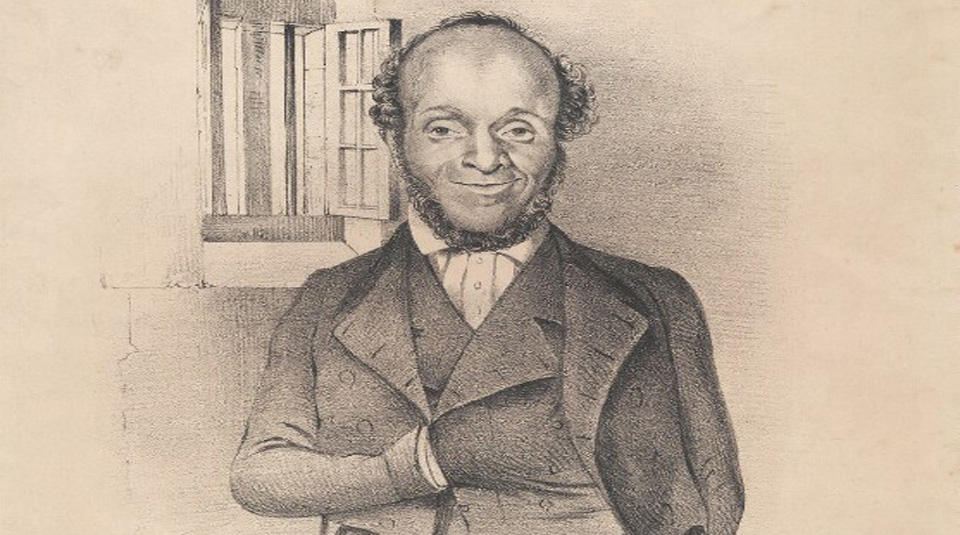
156th anniversary of the death of the black leader of London Chartism, William Cuffay. Still no London memorial. All history matters
The black leader of London Chartism in 1848 William Cuffay died 156 years ago on 29th July 1870 in Tasmania.
Black Lives Matter and fighting racism is about far more than statues but while hard right Reform and Tory MPs chunter on about Winston Churchill, about whom there is a great deal of public history, the long delayed memorial to the black leader of London Chartism William Cuffay remains…delayed.
There is a case for erecting a statue or memorial in central London, much discussed but never actually happening
William Cuffay was born in Gillingham in the Medway Towns in 1788, the son of a local woman and a former slave from St Kitts who had made his way to Britain by working on a Royal Navy ship. Many of those aboard Navy vessels in the late eighteenth century were black.
Little is known about Cuffay’s time in Medway.
We do know however that by 1819 Cuffay was in London and had learnt the trade of a tailor.
No doubt Cuffay would have been exposed to the radical working class politics of London in the 1820s and he was certainly involved in the strike called by the Grand National Consolidated Trade Union in 1834.
Cuffay went on to become, by the end of the 1830s, a leader of a group of London Chartist tailors.
In 1840 Cuffay was 52- very old for a Chartist activist at that time- and he became a central and trusted figure in London Chartism.
The best way to understand him is as the key ‘backroom’ organiser of Chartism in the Capital- raising money for jailed Chartists and being appointed to oversee the funds of the Chartist Land Bank.
By 1842 Cuffay had been elected from London to the national Chartist Executive. These positions were fiercely contested, so Cuffay will have had a considerable constituency of support.
Details of Cuffay’s work in this period can be tracked in the Chartist paper, the Northern Star, which is now available in digital format free on-line.
Martin Hoyles 2013 book on Cuffay has also revealed that during this period Cuffay was performing as a singer on the London stage.
Although more research is required it now seems clear that Cuffay was the organiser of the great Chartist demonstration on Monday 10th April 1848.
Chartists gathered at various points across London and marched south to rally at Kennington Common. The idea was then to proceed back across Blackfriars Bridge to present a giant petition for the vote to Parliament.
It was a strategic mistake- it’s unclear what part Cuffay played in deciding the venue for the rally. Police and soldiers blocked the way back over the River Thames and the national leader of Chartism Feargus O’Connor agreed with the police that the Chartists would not try to march.
Cuffay was understandably very annoyed at this decision and is reported as arguing that the march should go ahead.
We now know that there was hand to hand fighting between Chartists and troops on the south side of Blackfriars Bridge but a heavy April shower caused the attempt to be abandoned.
Later in the year, in August 1848, Cuffay was arrested for his part in an alleged revolutionary conspiracy at Seven Dials, Covent Garden. Arms were found in Cuffay’s house. His precise role in the events is unclear but it is very likely that as the London Chartist leader he was at the very least aware of what was planned.
Tried at the Old Bailey, Cuffay was sentenced to 21 years transportation to Australia.
Arriving in Hobart Tasmania, now over 60, Cuffay could have been forgiven for retiring from political activity. He did not. Instead he was active in a range of radical causes in the earliest years of the Australian labour movement. He was pardoned after 3 years but remained in Australia, dying in 1870.
Modern interest in Cuffay can be traced back to a chapter in Staying Power by the late Peter Fryer which recovered much of the history of black people in Britain.
Cuffay left no diary, autobiography or papers, but research to uncover details of his life and activity is continuing. There has been considerable effort in Australia and in Britain there have been plans to erect a blue plaque for Cuffay in the Strand. So far over some years they have got nowhere.
The Times in 1848 referred to Cuffay and the Chartists as ‘the black man and his party’ and we can now see that this was not hyperbole but a recognition that the London organisation of the world’s first working class movement was led by the son of an ex-slave from St Kitts.
Cuffay came from the imperial diaspora to challenge imperialism at its heart in London to find himself exiled to another part of the British Empire in Australia as a reward for his efforts
Time to recognise William Cuffay as one of the great figures in British history
Cuffay website


Leave a Reply