
Beyond Your Party, some histories of left names
The media is picking up on the point that Zarah Sultana and Jeremy Corbyn’s new political formation, currently badged as ‘your party’ does not have an actual name. A BBC report makes the interesting point that the current names of UK political parties, Labour, Conservative, Liberal Democrat have historic origins which don’t mean a great deal to many voters. Strangely it does not mention the BBC’s favourite subject Reform. Deliberately or not the name has an ambiguity. Some might assume it means positive change. The historical meaning of the word is one of reaction rather than political progression.
https://www.bbc.co.uk/news/articles/c3wnqj2pwvdo
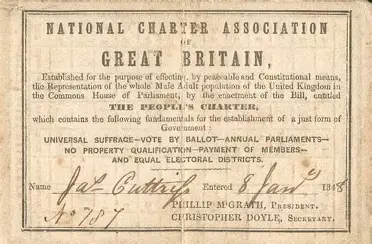
The world’s first ever working class party was formed 185 years ago in July 1840 in Manchester and named simply the National Charter Association. When left political parties formed on the rise of a new industrialised working class in the 1880s, we find the Social Democratic Federation (federation being a significant word here) and the Independent Labour Party (party being the significant word)
The report below is from the Glasgow Herald 14th January 1893. Ben Tillett’s contribution was rightly condemned but the discussion focused on a name that would resonate with the working class supporters the new Party was looking to engage with and get the support of. European social democracy preferred to use variations on the name, while the Labour Representation Committee in 1900 added another perspective
Mr GEORGE CARSON (Glasgow) moved, on behalf of the Scottish Labour party, that the title of the organization should be “The Socialist Labour Party,” saying that it was felt in Scotland that there was no reason why they should not call a spade a spade.
Mr H. A. BARKER (London) proposed as an alternative “The Independent Labour Party,” and argued that there were large numbers of working men who were not yet prepared to adopt Socialism as an entirety, yet who would be very glad to join a party which was established for the purpose of obtaining the independent representation of labour.
Ald. BEN TILLETT strongly opposed the resolution, on the ground that English trades’ unionism was better and stronger than any kind of Socialism, whether English or foreign, and his desire was to capture trades’ unionism for the Independent Labour movement. English trade unionists were a body of men who paid their money for the cause, and were Socialists at their own work – not blood-red revolutionists and chattering magpies on the platform, who sneaked to the nearest bed when the revolution came.
Mr GEORGE CARSON, secretary of the General Arrangement Committee, strongly protested against the language used by Alderman Tillett.
After considerable discussion, the amendment was carried by a very large majority.


Leave a Reply