
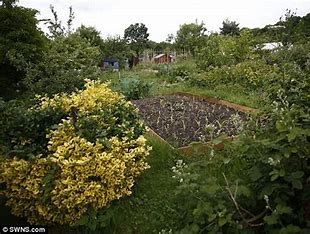
Why Angela Rayner decided to announce a small scale repurposing of allotment space for social housing during the Parliamentary summer recess and when she does not have the power to do this without consultation with the Allotment Society (which seems to have taken place) is of course subject to social media speculation.
What is certain is that it inspired veteran North London allotment holder Jeremy Corbyn to write in defence of allotments in the Daily Telegraph (paywalled but his comments are below). There are reportedly 330,000 allotment holders in the UK. I’m not much of a gardener myself but my North London experience is that allotments are highly prized and difficult to get- there are often waiting lists.
Allotment holders have clearly now joined the rather long list of people which the Government has decided it wants to annoy. The political mindset that leads to this kind of strategy is, well, interesting
Corbyn in the Telegraph (5th August)
The loss of allotments makes us all poorer
By Jeremy Corbyn
News that Angela Rayner may approve allotment sales will fill many with deep dismay.
Allotments have always been under threat from developers. Now, that threat seems to have government backing, which makes the future of these precious spaces even more perilous.
Those advising government and local authorities should have some regard for the troubled history of land ownership, and the struggle over access by those who simply want to grow their own crops.
The debate goes back to the English Civil War, when the King wanted to secure control of the land he had gained, while Cromwell claimed to speak for the farmers. In truth, it was the Diggers who were the real revolutionaries. They wanted land to be in common ownership.
Despite the restoration of the monarchy, huge areas of land were known as the Commons and survived for almost another two centuries. That is, until the greed of big landowners won out once again.
The Enclosure Acts, one of the most grotesque abuses of power by Parliament, took away the growing and grazing rights of the rural poor. A monstrous attack on working-class life, the enclosures represented the widespread theft of public land, sanctioned by a parliament that was dominated by landowners.
The rural poor, left with nothing and facing starvation, were forced to migrate to industrial cities. It was in these rapidly growing industrial cities – notably in Birmingham – that allotments started to grow. Allotments, then, grew out of opposition to enclosures and the privatisation of common land.
Allotments were regulated in the late 19th and 20th century and, even though numbers have since fallen, there are about 330,000 allotment plots. At least 100,000 people are on waiting lists.
‘Once lost, they never return’
Allotments have been crucial in times of national stress. Many came out of the Second World War. Indeed, many that were established in the First World War, such as the one I enjoy in north London, have survived to this day.
Once lost, they never return. Their loss makes us all poorer, as we become more and more detached from how food is grown and how nature interacts with us.
Allotments provide a vital space for community cohesion, biodiversity and social solidarity. These parcels of land, that cannot be individually fenced, provide growing space for many people.
Many people have no access to their own garden, and an allotment gives them the opportunity to grow vegetables and fruit and observe nature.
Allotments are particularly important for people who experience stress and mental health problems. I speak to many people who would love access to them for this very reason.
Property developers have always had their eyes on these parcels of land. Together with local authorities, they construct various arguments for building over them. Instead of contemplating sales of these wonderful spaces, the Government should be encouraging the growth of allotments, or where there is insufficient land, the growth of community and school gardens.
In my own borough of Islington, community gardens have played a vital role in bringing the community together and encouraging sustainable food production.
Of course, social housing is desperately needed, but we need not sacrifice these vital green spaces to build it. We can build on ex-industrial land and take over empty properties. Even then, we should ensure social housing is accompanied by community gardens and adequate growing space.
Is this Government going to put the nail in the coffin of the joy of digging ground for potatoes on a cold, wet February Sunday afternoon? The battle for the grass roots is on!
Jeremy Corbyn is the independent MP for Islington North


Raynor is siding with property developers who will not use the land grab to build houses for people in need.
one travesty was the Lea Valley allotment site…one of the oldest and the most diverse in people and plants produced.
The permission was given to build sporting facilities for the Games saying that this was “waste ground with no use being made of it”..
The allotments were lost… As was a good road cycling circuit, then pushed out to Hog Hill.
Ironic that not all the sporting facilities survived , but at least the velodrome..”The Pringle” did