
Peter Hain, Palestine protest & the Repertoires of Contention
Peter Hain has criticised that Government’s decision (subject to legal challenge and protest) to proscribe Palestine Action. His points in the Guardian (13th August) are spot on as far as they go but not entirely unproblematic
It’s going to get worse [for the government] because I don’t see people from that ‘middle Britain’ background who have joined these protests in such large numbers to suddenly decide that all is OK,” he said.
“In fact, I think more are going to come out and face arrest because the approach to Palestine Action is contrary to every form of peaceful protest in British history, whether that’s the chartists and suffragettes or anti-apartheid and anti-fascist protesters.”
The activities of Palestine Action are mostly peaceful. That involves going on demonstrations, protesting outside arms factories and so on. Some, who may or may not be members, have engaged in more robust action against arms manufacturers, damaging property and equipment. That is still peaceful protest in the sense that it is an attack on property not people.
However there is no easy division between peaceful and more robust protest. The Chartist slogan was peaceably if we can, forcibly if we must. The Chartists petitioned for the vote, they held protest meetings and demonstrations, called several General Strikes and had at least two attempts at armed revolt. In Newport in November 1839 they almost succeeded. In Central London in August 1848 they did not.
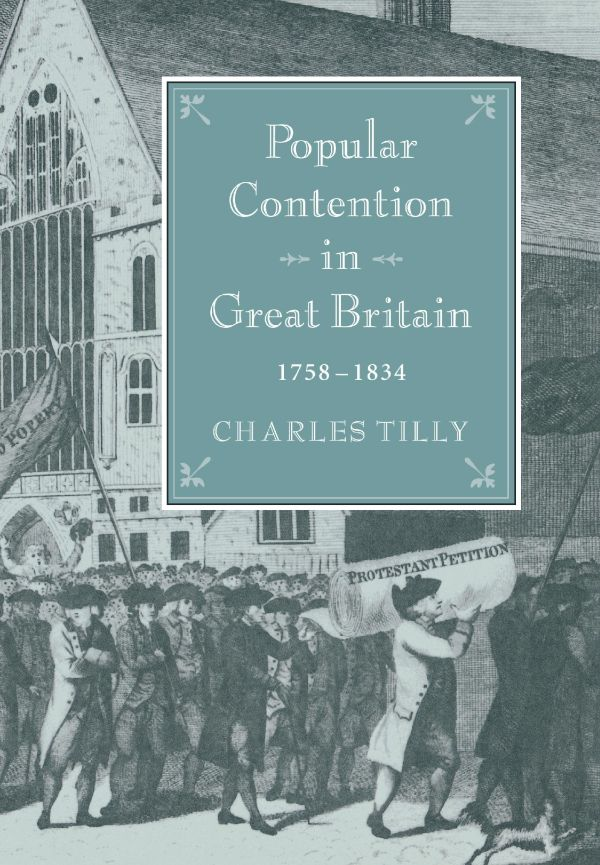
Charles Tilly’s Repertoires of Contention (publishers summary below) sees a hierarchy of protest from petitions to riot and revolt. That isn’t really how protest works. Some may protest only peacefully, others may decide to do whatever is necessary.
So for example Peter Hain mentions anti-fascist protests on which as a founder of the Anti-Nazi League he knows a lot. Of course the specific aim is to mobilise large enough numbers to simply stop fascist mobilisations. Often that works but not always. After all what was Cable St all about?
Charles Tilly
between 1750 and 1840 ordinary British people abandoned such time-honored forms of protest as collective seizures of grain, the sacking of buildings, public humiliation, and physical abuse in favour of marches, petition drives, public meetings, and other sanctioned routines of social movement politics. The change created–perhaps for the first time anywhere–mass participation in national politics.
Charles Tilly is the first to address the depth and significance of the transmutations in popular collective action during this period. As he unravels the story of thousands of popular struggles and their consequences, he illuminates the dynamic relationships of an industrializing, capitalizing, proletarianizing economy; a war-making, growing, increasingly interventionist state; and an internal history of contention that spawned such political entrepreneurs as Francis Place and Henry Hunt. Tilly’s research rests on a catalogue of more than 8,000 “contentious gatherings” described in British periodicals, plus ample documentation from British archives and historical monographs.
The author elucidates four distinct phases in the transformation to mass political participation and identifies the forms and occasions for collective action that characterized and dominated each. He provides rich descriptions not only of a wide variety of popular protests but also of such influential figures as John Wilkes, Lord George Gordon, William Cobbett, and Daniel O’Connell. This engaging study presents a vivid picture of the British populace during a pivotal era.


Leave a Reply