
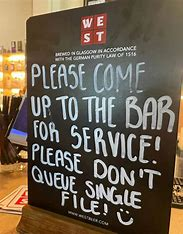
Queueing in pubs: how much of a tradition?
The debate on queueing in pubs seems to be continuing with Roger Protz posting on Blue Sky on it for example and lots of comments on various FB sites (more on that below).
Queueing in part is a social tradition, a sort or rudimentary nod to equality that the fittest and strongest don’t come first. The London bus queue has been replaced by a huddle (or sometimes scrum) around the door although believe it or not there are some places in the UK where the bus queue still exists.
Pubs are more problematic. Thinking of some favourite beer and beard bars, in several there is not enough room at the bar to do anything but queue. In another since people are invariably sitting at the bar, it’s a case of where you can politely elbow your way in. There would be no point in queueing.
Much of the debate seems to centre around Wetherspoons which does after all have 800 pubs. Of course these days you can sit at your table and order on the App, assuming that the App is UpToDate which on my occasional Spoons visits it sometimes is not.
Most if not all Spoons have lengthy bars but often not huge numbers of bar staff serving. Matters have improved considerably since the days of what I used to think of the Spoons random service method. Here you stood as much chance of getting served hovering somewhere in the vicinity of the bar and catching the eye of a bar person as you did standing at the bar.
Any way on those Spoons visits I do order at the bar not least because it’s a good way of making sure you get the beer you actually want. Understandably sometimes bar staff can get distracted. I never see a queue but these are traditions which depend on social interaction. A queue is certainly preferable to random service but I think if I found one I’d retreat to my table and use the App.
A sobering final thought is that queuing at the bar for a beer is not the worst of things. In the Making of the English Working Class (1963) E P Thompson notes in a section on Standards and Experiences that well into the nineteenth century queuing for water to drink or wash clothes in in some rural and urban communities was common.
Looking at the runes while there are articles (not monographs) on aspects of the history of queuing there does not appear to be a social history of the queue. Happy to be corrected but otherwise there is an interesting subject for a potential PhD student


Leave a Reply