
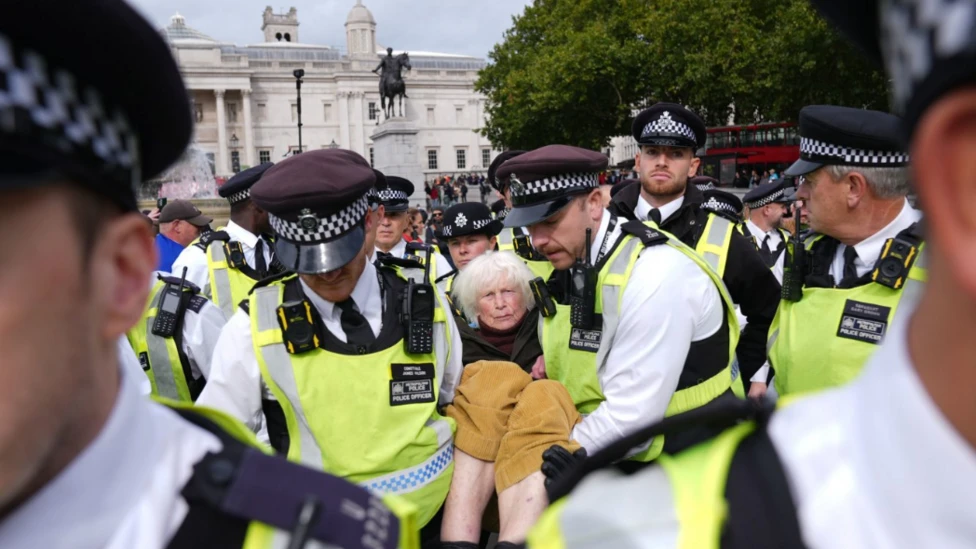
On Saturday 4th October the Met Police say that they arrested 488 people for protesting largely under a Defend Our Juries basis for mentioning words about Palestine that the latest authoritarian Home Secretary Shabana Mahmood thinks should not be mentioned. Its one of the biggest exercises of wasting police time and resources in recent years (The Met are specialists).
It’s clear except clearly to Mahmood who was not paying attention in history lessons that more protesters will step forward. There is a well-known precedent in British history.
Around the period of Peterloo in 1819 the (Tory) Government was determined to crack down on radical opinion and calls for democratic rights. Prosecutions for seditious libel were common and the taxes on knowledge(levied on newspapers) saw the rise of an unstamped, illegal press. Many who published it went to jail, but that didn’t stop publication.
One of the best known was the freethinker Richard Carlile. In the early 1820s he ran a radical bookshop in Fleet Street known as the Temple of Reason. Carlile was frequently jailed but he had an important principle: THE SHOP IN FLEET STREET WILL NOT BE CLOSED AS A MATTER OF COURSE’
It wasn’t. Before the Government gave in 150 volunteers, shopmen, printers, newsvendors, had been jailed and served over 200 years of imprisonment between them.
Whose were these people? E P Thompson noted in the Making of the English Working Class:
The men and women who came forward were, in nearly every case, entirely unknown to Carlile. They simply came out of London; or arrived on the coach from Lincolnshire, Dorset, Liverpool and Leeds. They came out of a culture.
Interestingly though Thompson was also clear that while those who broke the law and fought for press freedom were part of the rise of a radical working class movement, they themselves were not usually workers, with the power to organise and challenge capital at the point of production, but artisans.
However the reading culture they promoted and developed fed into the rising working class movement and was one of the motors for Chartism from the later 1830s.
Perhaps the protests on mentioning words that must not be mentioned won’t change the world but they might help create a movement that does


Leave a Reply