
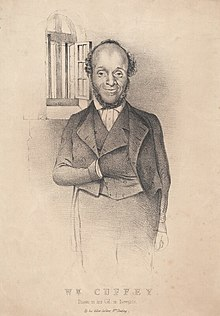
The black leader of London Chartism, Hobart & Ashes Tests
Jim Maxwell in conversation with Alex Hartley mentioned Van Diemen’s Land (Tasmania) in Test Match Special commentary on the first day of the fourth Ashes Test in Melbourne.
Cricket in Tasmania goes back to the early nineteenth century when it was brought to the town by British military and missionary personnel. The inhabitants of the area at this point were twofold. Firstly the existing indigenous population and secondly convicts transported from Britain.
Both groups played cricket often against each other with the British governing class population (a small number)also participating.
One of the convicts in Hobart from 1850 to 1870 (when died aged 82) was the black leader of London Chartism William Cuffay. Cuffay, a tailor by trade had been sentenced to transportation for his alleged part in a putative central London Chartist rising at Seven Dials in August 1848.
As a political prisoner he was left to work and organise in Hobart and was in fact pardoned in 1857. Its not clear if he played or watched cricket. He was perhaps rather old to play. He had been known as a theatre performer in London and may well have continued this in Hobart so we do know that his interests extended beyond political organising.
Between 1846 and 1848 he was the auditor of the Chartist Land Scheme that built small agricultural villages in England and allowed Chartist supporters to opt out of factory work. The scheme ultimately failed, frustrated by Government refusal to make it legal. However villages were built including the first at O’Connorville which is at Rickmansworth (just off the M25). The houses-now dwellings for the better off still stand.
On 6th August 1847 the Chartist Northern Star reported a cricket match that was played there to mark the election of Chartist leader Feargus O’Connor as the MP for Nottingham. Did Cuffay attend? We don’t know although when he was arrested in August 1848 a banner from the Westminster Chartist branch that had been used at O’Connorville was found in his rooms.
Research in progress


Leave a Reply