
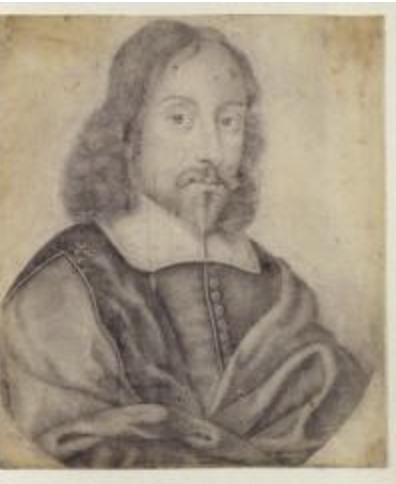
Robert Browne
From Shakespeare’s Twelfth Night to the New Model Army & the Commonwealth (1649-1660)
William Shakespeare wrote Twelfth Night in 1601/2 as a seasonal entertainment. It was first performed at Candlemas, February 2nd 1602. In the Christian calendar Candlemas is one signifier of the end of Christmas although in 2025/6 the Church England takes it as the eve of Epiphany in early January.
Michael Rosen has pointed out to me that the play contains a reference to Robert Browne (1550-1633)
In the play (Act 3 Scene 2) Sir Andrew Aguecheek says, “I had as lief be a Brownist as a politician” .
Agucheek has the character of a fool in the play and Shakespeare is making a topical reference to Brownism which had developed from the thought of Robert Browne. The point being made is that Aguecheek no more wished to be associated with the dissenting views of Browne than he did with politicians. Ironically Browne was as much opposed to politicians as he was the ‘mainstream’ Church.
Browne’s idea was that each Church should stand on its own authority, appointing its own Ministers without a central controlling body. He preached for a period at St Mary’s Church on Islington Upper St. The church still stands although it has been rebuilt since the early 1600s.
Browne’s followers were persecuted and imprisoned and Browne himself abandoned what became known as Congregationalism and became an Anglican Minister.
The ideas he promoted however took deep root. Many of the rank and file of the New Model Army in the 1640s were Congregationalists (less so for the officers) and Cromwell followed a similar path enforcing a separation between Church and State in England (there were other plans for Ireland and Scotland). On 30th January 1649 in Whitehall the principle of the Divine Right of Kings and its then key figure Charles 1st lost their heads (as it were).
As Michael Rosen points out Browne had a beard but whether this was significant in terms of his religious ideas is less clear. Following his principles it would presumably be up to the members of each individual church to decide what the precise role of beards should be.


Leave a Reply