
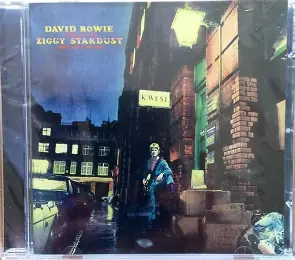
David Bowie Ten Years on (8.1.47-10.1.16)
It’s ten years since the death of David Bowie and I note the question being asked of how much he is now remembered
After all I’m so old that I got Hunkdory and Ziggy Stardust when they were first released in the early 1970s, which is over fifty years ago now.
Bowie was an iconoclast in terms of music and ideas so you could certainly never say he was a man of the left in political terms.
Yet the world is often not so simple. There are those whose professed aim is to make the world a better place who achieve little in that respect (sometimes not for want of trying) and there are those who manage to change things a bit even though it was probably wasn’t particularly the main thing they had in mind. Bowie I think is in the second category.
As Tom Robinson tweeted after Bowie’s death, the Ziggy persona and arguably Aladdin Sane too gave hope to a generation of LGBTQ youth that it was ok to express their sexuality. In 1970s Britain that was something rather significant.
The Thin White Duke of the Heroes period may have been an impressive persona but it was not something that could be lived with on the left. Bowie was looking at fascist ideas and imagery at a time when the genuine fascists of the National Front were a growing force in Britain.
I doubt too many NFers saw the videos of Heroes (the German language one in particular is memorable, though hardly for the best of reasons) and certainly the impact was nothing like the remarks of Eric Clapton that led to the founding of Rock Against Racism.
Bowie later donated money to the Anti-Nazi League, a reminder that above all he was playing with ideas and music, experimenting with forms, rather than aiming to make overt political statements.
Perhaps his legacy, aside from great music, is a discussion about whether a musician now could have the wider impact on society he had in various ways in the 1970s, even though, as above, it was probably not something he was striving to have.
His flirtation with fascist ideas and symbolism can’t be ignored but it was one moment in a complex artistic career. Another was in the early 1970s when he helped to shift the stifling social and sexual relations of post 1945 Britain into a rather better place.


Leave a Reply