
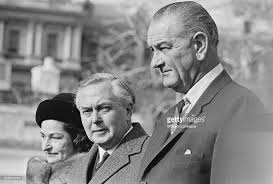
Labour Governments & US Wars. Starmer, Blair and Harold Wilson
Keir Starmer who opposed the 2003 Iraq War because it was illegal has now agreed that the US can use British bases for ‘defensive’ purposes in Trump’s illegal war on Iran. Trump had a rant about this, noting Starmer should have acted sooner, before someone put the Mango Mussolini’s dummy back in
What Blair did on Iraq is well within current memory. He backed Bush because he claimed it was important to keep in with the US. Perhaps Blair had a smidgeon of influence on Bush. Starmer has none on Trump.
What that altogether more wily politician Harold Wilson did on Vietnam was slightly different while achieving some of the same ends.
Unlike Australia and New Zealand, Britain did not commit forces to US efforts to prop up the corrupt Diem regime in South Vietnam from 1962-1975.
If Britain did not commit front line troops in Vietnam, British Government support for American action was largely unwavering. In March 1965 Harold Wilson told the Commons that the Government fully supported ‘the action of the United States in resisting aggression in Vietnam’.
He was echoing a line developed by the Tory PM before him Alec Douglas Home and backed by the Tory PM after him, Heath, as well.
What did this full support mean?
While no troops were officially committed, the SAS fought in Vietnam under the banner of the Australasian forces. Other troops were seconded to the US and fought under that auspices.
These were not rank and file soldiers but specialists and experts in jungle warfare.
Indeed Britain trained US, Vietnamese and Thai troops in its Malaysian facilities in the late 1960s.
It was not just training and expertise that was provided.
The British monitoring station at Little Sai Wan in Hong Kong was used by the Americans to help them target bombing raids on North Vietnam.
All that said Wilson also resisted considerable pressure from Democratic President Johnson to publicly back the US with troops. He resisted, perhaps because he recognised the potential political consequences and that may well have been related to the strength of opposition to the Vietnam War in the UK.
Wilson also, at least up to the Tet Offensive in Spring 1968 when it became clear that the US was in any case losing the war, associated himself very closely with international negotiations to secure a ceasefire and peace in Vietnam, albeit essentially on US terms.
As ever, protest and survive


Leave a Reply