
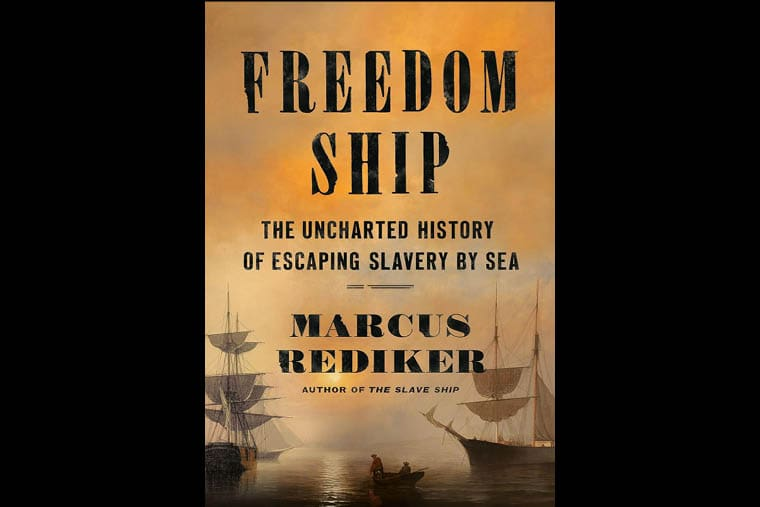
Marcus Rediker is a long standing socialist historian standing in the tradition of history from below associated with E P Thompson and others.
Rediker’s work has focused on slavery, sailors, ships and the sea and the global political importance of links between them. In an interview with Socialist Worker about his new book Freedom Ship, Rediker criticises what he calls terracentrism. The idea that history takes place on dry land. Rather Rediker’s researches underlines a lot of history has taken place at sea, on ships and on the waterfront.
E P Thompson’s Making of the English Working Class contains a surprising amount about the sea and sailors. For example writing about the 1797 naval munities at Spithead and the Nore Thompson notes that it was only the British Navy that stood between Britain and the ideas of revolutionary France.
The Socialist Worker interview discusses history from below
The essence of your work is history from below. Would you explain why this is integral to you?
History from below is an insurgent approach to the study of the past seeking to understand the lives, thoughts and actions of the mass of people who have been left out of the top-down narratives.
The goal is to study the workers of the world, not only as subjects, but as makers of history.
In my case, the ultimate challenge of history from below was to write The Slave Ship: A Human History, 2007. How to write a history of millions of people, forced onto thousands of slave ships and carried across the Atlantic to slave away on plantations, when those people left very few documents of their own?
I argued that the resistance of enslaved people on the lower decks of slavers was crucial to the growth of an anti-slavery movement and ultimately to the ending of the slave trade altogether.
I picked up that theme again in Freedom Ship, showing that the quest for self-emancipation in the 19th century were a direct continuation of those that began among an earlier generation of struggles aboard the slave ships.
Harriet Tubman captured this continuity of oppression and resistance when she described escaping slavery by sea as a “middle passage” to freedom.
- Freedom Ship—The Uncharted History of Escaping Slavery by Sea, Marcus Rediker, Bookmarks Bookshop, £25
Freedom Ship: Uncovering the story of escaping slavery by sea


People have always travelled by sea. They have explored, traded and settled, as well as more aggressive activities.
Anyone with sea occupations in their heritage should know this.