
The Executive Committee of Your Party determined on 12th April that those who are members of a list of proscribed organisations are not eligible to be members. It has a whiff of ‘are you now or have you ever been’ but it also ignores the history of how the British left came to be just that.
The current period post the 2008 crash and Brexit is one of political turmoil in Britain but that is reflected across Europe and beyond in terms of the impact on the left.
The years from 1890 to 1930 saw a similar turmoil in Britain, though for different reasons. By 1918 most men and women had the right to vote. The great industrial unrest of 1910-12 saw the development of a new militant working class. The imperialist war of 1914-19 impacted on that and new left emerged with the foundation of the Communist Party in 1920, the first Labour Government in 1924 and the 1926 General Strike.
Politically the Independent Labour Party founded in 1893 did not include the Marxist Social Democratic Federation or the Fabians, both of whom had been involved in the discussions but withdrew. The SDF did then look at uniting with the ILP but it was determined this would not work. The two organisations did however at least try to avoid electoral conflicts.
The question changed just seven years later when the issue was finding a way to protect unions and union officials from employers legal attacks.
The Labour Representation Committee was formed at a conference held in Farringdon St, central London, on 26 & 27th February 1900. Its aim was to secure Parliamentary representation for the interests of working people, that is ‘labour’ but in practice union HQs. It was not to obtain a majority Labour Government. Such a matter was un-thought of at the time.
It included the ILP, the SDF, the Fabians and union officials who had in the main been Liberals, hence the term Lib-Lab was used.
The building still stands (much modernised)and the Memorial Hall is marked by a plaque. I covered the offices it now accommodates as a union officer for many years.
In 1906 29 MPs were elected under the LRC banner and the Parliamentary Labour Party was formed. The vote for who should lead it was tied on the first round and on a subsequent vote Independent Labour Party member Keir Hardie just edged ahead.
Naturally there was a good deal of interest in who the 29 Labour members were.
Many were from Lancashire- where the Liberal vote had been weak but anti-Tory feeling still strong. There were also trade union officials and leaders with a minority being ILP socialists like Keir Hardie, Ramsay MacDonald and Philip Snowden,
There were no women- female suffrage did not yet exist. The split between moustaches and beards in the ranks of the LRC MPs was more or less even with Philip Snowden clean shaven.
There is a lot of detailed labour history here, which is not the purpose of this post. The SDF largely absented itself from the LRC and became the British Socialist Party.
The Labour Party as we now know it did not exist until 1918 when Sidney Webb wrote the Constitution which mostly still stands (Clause 4 was amended in the New Labour years). Until then it was not possible to be an individual member. Much of the electoral work was organised by the ILP which remained an affiliated organisation until the early 1930s.
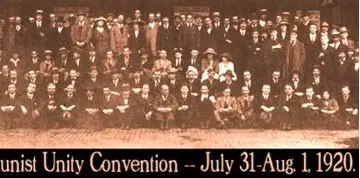
After the formation of the Communist Party in 1920-a key impetus being the 1917 Russian Revolution- the question of how broad Labour was remained open. While applications from the CPGB to join Labour were rebuffed there were on occasions joint Labour and Communist candidates at elections. Saklatvala was elected as an MP for Battersea on this basis in 1922. However by the late 1920s the possibility of Communists being part of a Labour Broad Church was closed off.
The point I am making here, I hope, was the political turmoil of the 40 years from 1890 to 1930 (more turmoil was of course to come after that) saw left-wing organisations formed, reconfigured and founded to fit the political needs of the time. It was unavoidably messy and sharp arguments and differences existed (for example on opposition to the First World War, and whether Parliament was an effective vehicle for socialist advance- see Lenin, Left Wing Communism). However the kind of administrative measures seen on 12th April were not central to how matters played out.
Why? Because the left politics did have a considerable sometimes mass working class constituency who were looking for ways to improve and change the world. That acted as corrective on sectarian squabbles, even though they certainly existed.
Of course within this was a constant interplay between reformist and revolutionary politics. The formation of the CPGB marked a distinctive break except that for almost ten years from 1920 the theory and sometimes the practice was to work also within the wider reformist current.
I should perhaps underline that the above is schematic and designed in part to provide context to discussion about dual membership in Your Party. There is a lot of history here. Walter Kendall’s book on the period before the formation of the CPGB, long out of print, has recently been republished. I didn’t agree and still don’t with some of the key points but as a lengthy introduction to the complexities of left politics in a key period in British labour history it is well worth reading.


Leave a comment